Yin and Yang Symbol Meaning: What the Taiji Really Shows

Half the world recognises the yin and yang symbol, and most of us were handed one sentence about it: it means balance. That is true, and it is also the least interesting thing about the image. What the yin and yang symbol actually shows is motion, two forces continually changing places, which is why the classical texts never described them as equal halves parked on either side of a line.
We handle this symbol every day at the studio, mostly carved into obsidian or set into gold, and the questions that come back are always the same three: which half is which, what the two dots are doing there, and whether it matters which way round it hangs. Those come first here, then the philosophy underneath them.
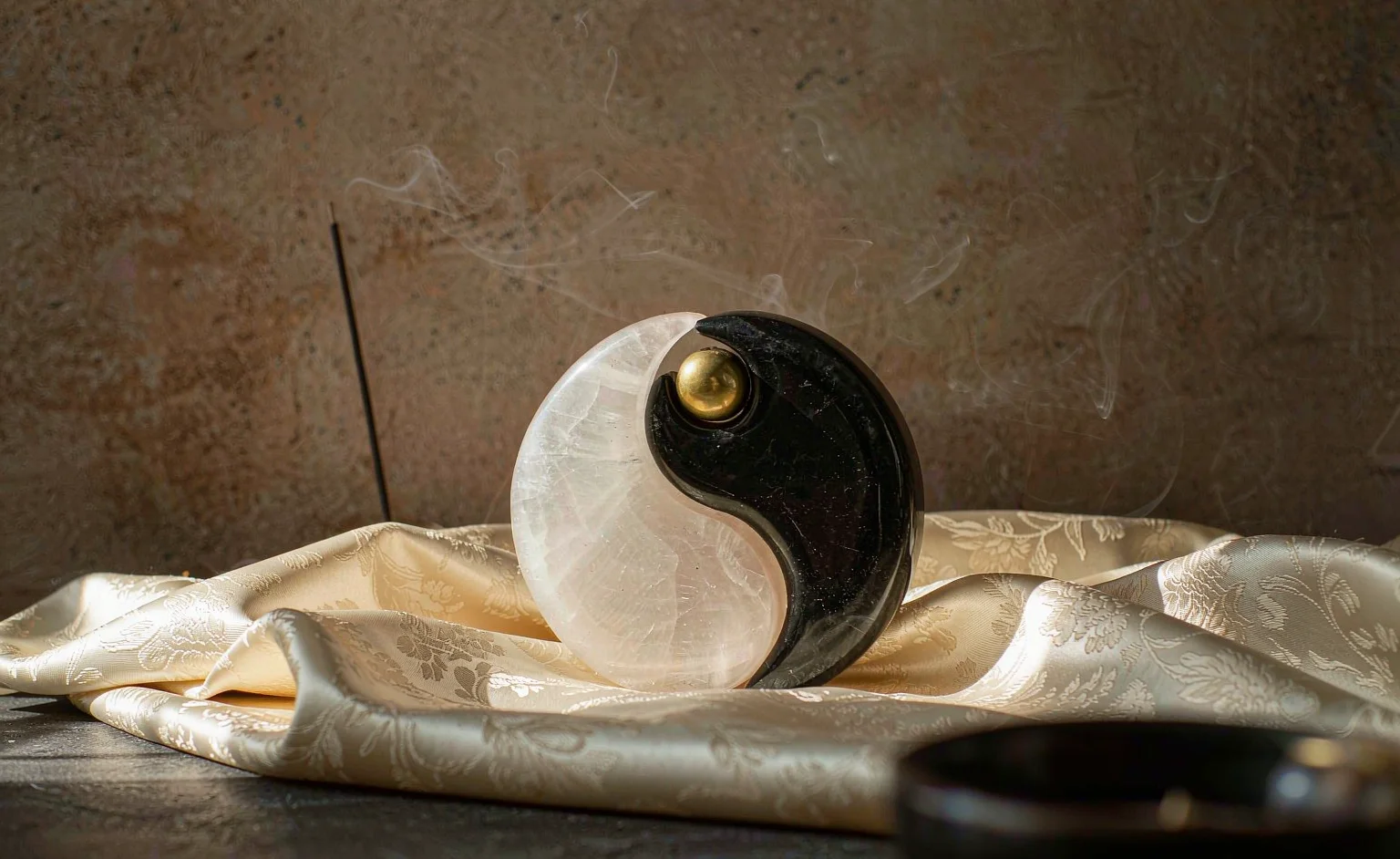
What Does the Yin Yang Symbol Mean?
The yin and yang symbol means that two opposite forces are permanently in contact and permanently changing places: stillness and movement, cold and warmth, the inward and the outward. Yin is the still, cool, receiving side; yang is the moving, warm, active side. The diagram is a rhythm, not a scoreboard. If you are considering a permanent version, our guide to yin yang tattoo meaning covers scale and line weight.
Everything else about the shape follows from that. Stillness is yin and motion is yang; mountains are yin and water is yang; the south is yang and the north is yin; warmth is yang and cold is yin. Notice that not one of those pairs is moral. Yang is not the good one and yin is not the sad one, and a reading of the yin and yang symbol that sorts them into virtue and vice has left the system behind entirely.
Where the symbol comes from
The classical working-out of yin and yang belongs to the School of Naturalists, one of the nine pre-Qin schools of Chinese thought. Its best-known figure, Zou Yan, built the Five Virtues cycle, a five-phase sequence used to explain dynastic change, and the five-element system behind it grew out of very old astronomical calendars that counted five seasons rather than four. That is the tradition the yin and yang symbol summarises: a system for describing how phases hand over to one another, not a charm and not a mascot.
Yin Yang Symbol Colors: Black, White and the Dots
Yin yang symbol colors carry less symbolism than most people assume. The dark half and the light half are shorthand for the contrasts the classics actually list: cold against warm, still against moving, inward against outward. Dark is not evil here and light is not virtue. Those are imported readings, and they are the reason so much modern interpretation of the symbol collapses into a fight between two teams.
What does the small dot mean?
The dots are the most useful part of the design. Each half contains a dot of the other colour, which is the classical law of opposition within unity: no state is ever pure. The dot of yang inside the dark half says that the still hour already contains the beginning of movement. The dot of yin inside the light half says that the busiest stretch of the day carries its own need for rest. Read that way, the small dot is a warning against treating any mood, season or plan as permanent.
In our own work this is the detail we point to first, because it changes behaviour. A person who thinks the symbol means fifty-fifty will try to answer a hard morning with an equally hard evening of rest and feel like a failure when it does not work. A person who reads the dots will simply move the recovery earlier and stop grading themselves against a ratio.
Taiji Symbol Meaning: Why It Is Not Static
Taiji symbol meaning is usually flattened into a logo, but the classical reading is about movement. The two halves are drawn as though they are rotating into each other, each swelling as the other thins, and nothing in the outline suggests a fixed border. That shape is the third law of yin and yang translated into line work: extremes turn into their opposite.
The three classical laws behind the shape
Three laws do the work. The first is opposition within unity, which the dots carry. The second is waxing and waning: winter turning into summer is yin waning exactly as yang grows, and the S-curve is that handover drawn as a line rather than a moment. The third is mutual transformation, described in the Huangdi Neijing as extreme cold producing heat and extreme heat producing cold, which is why the two halves are curved around each other instead of split by a straight border. Once you have those three, the yin and yang symbol stops being a badge and becomes a diagram you can actually reason with.
The practical version of that reasoning is a schedule. If a heavy stretch of work is yang, the recovery that follows is not a reward, it is the other half of the same cycle arriving on time. Our guide to the 24-hour energy rhythm walks the whole sequence through a working day.
The Symbol Next to the Five Elements
The taiji and the five elements answer different questions, which is why they are so often mixed up. The yin and yang symbol describes two forces and their handover; wuxing describes five phases and the cycles between them. The generating cycle runs Wood to Fire to Earth to Metal to Water and back to Wood, while the controlling cycle keeps any one phase from running away: Wood controls Earth, Earth controls Water, Water controls Fire, Fire controls Metal, and Metal controls Wood.
The correspondences are specific, and they are worth keeping straight: East is Wood, South is Fire, West is Metal, North is Water and the Center is Earth; Spring is Wood, Summer is Fire, Late Summer is Earth, Autumn is Metal and Winter is Water. The classical day cycle is deliberately lopsided, dividing the hours into four periods, Wood then Fire then Metal then Water, with no Earth period at all. We do not invent one to make the table look tidy. If you want the longer version, our explainer on the five elements and wuxing goes through it in detail.
Yin Yang Symbol in the Home: Where It Works and Where It Becomes Wallpaper
Yin yang symbol in the home is a question of restraint more than rule. The design reads best where people actually pause: a hallway, the corner of a desk, a bedside table. Put it somewhere you pass while hurrying and it turns into wallpaper, which is the opposite of what a still figure is for.
Do you have to hang it a certain way?
No, and we tell clients not to overthink it. The classical compass attributions assign elements to directions and seasons, not to decorations, so there is no classical rule that says a yin and yang symbol must face south or rotate clockwise. What we suggest instead is that the piece match the room’s existing character: a dark stone version in a cool north room, a lighter or warmer finish in a room that gets afternoon sun. That is a design decision, honestly labelled as one, rather than a citation.
The symbol works badly when it becomes product noise, repeated on every surface until it means nothing. One clear piece in a room you actually sit in does more than five scattered around the house, and this is a design principle we apply to our own range before anything else. For the wider question of how a room’s direction, season and light already behave, our notes on restoring balance in a modern home are the practical companion.
Four Common Misreadings
Most confusion around the yin and yang symbol comes from one of four places, and all four are easy to correct.
- Good versus evil. The two halves are not moral opposites. Yin is cool, still and receiving; yang is warm, moving and active. Neither is the villain.
- A permanent fifty-fifty split. The whole point of the curve is that the proportions keep changing. Balance is the movement, never the resting position.
- Treating it as a purely Daoist emblem. The classical systematisation belongs to the School of Naturalists and Zou Yan. Reading it as one tradition’s logo flattens a much wider history.
- Assuming the dots are decoration. They carry the first law. If you take them out, you have a two-colour badge rather than a description of how things change.
Quick Answers About the Yin and Yang Symbol
Is the yin yang symbol religious?
The yin and yang symbol is a cosmological diagram before it is anything else, which is why it turns up across Chinese philosophy, architecture and martial arts without belonging to a single devotional practice. In our own catalogue it is a brand mark and a design motif, used for the idea it carries rather than as an object of worship.
Can you wear it?
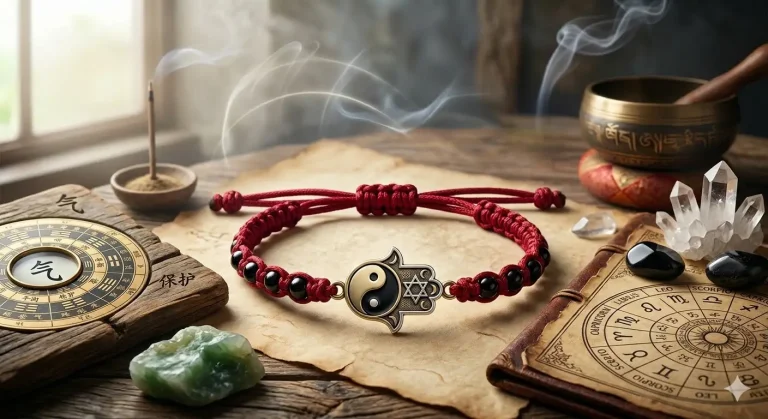
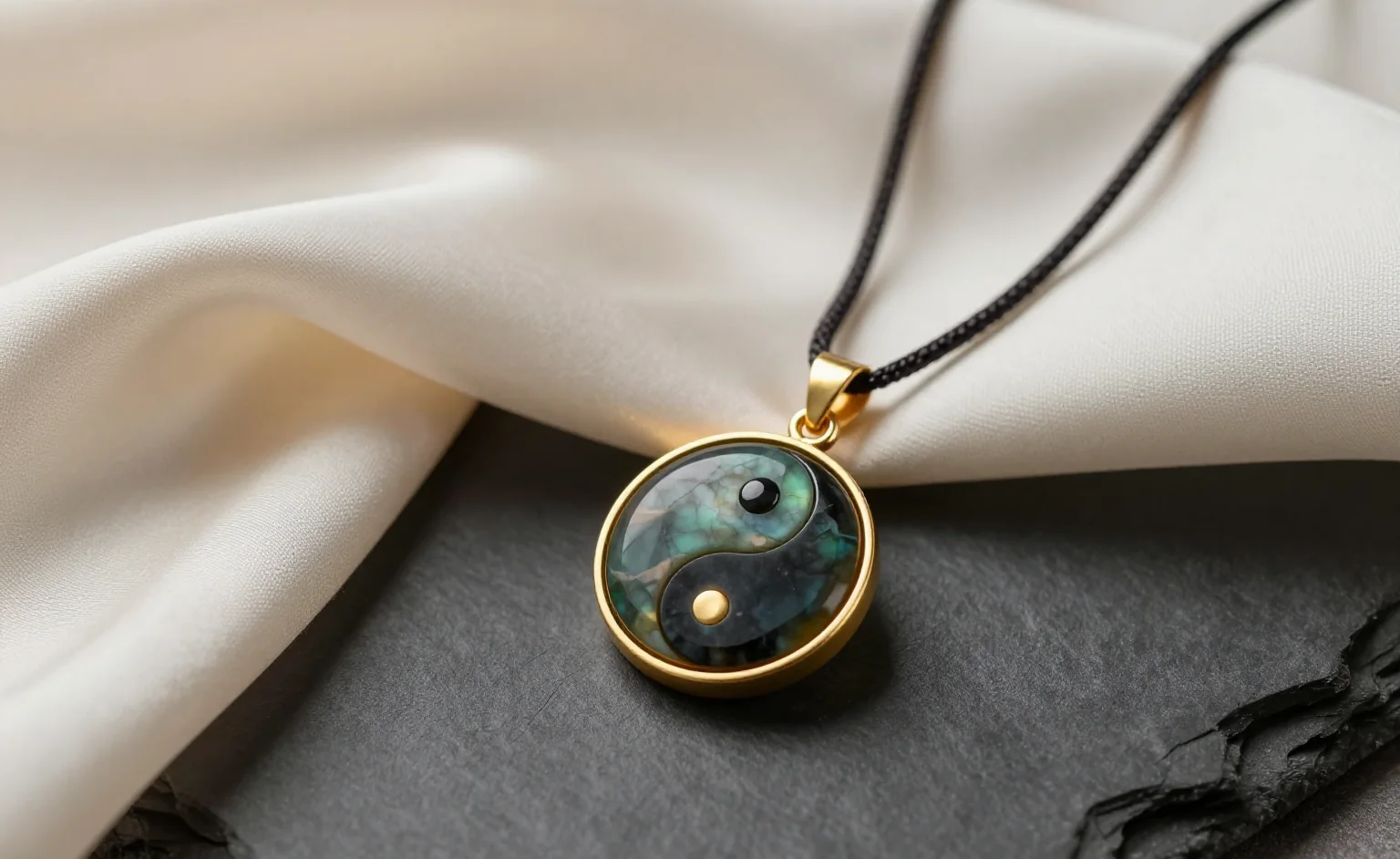
Yes, and it is one of the few symbols that survives being small. A pendant or a bracelet carries the whole idea in a shape you can read at arm’s length, and unlike most amulets it makes no promise. You can browse the pieces that use it if you want to see how it behaves on obsidian, gold and stone.
Which half is which?
The dark half is yin: still, cool, inward, receptive. The light half is yang: moving, warm, outward, active. If you remember only one thing, make it the pair of directions, because inward and outward describe the contrast more usefully than any list of adjectives.
Where the 6 and the 9 Meet
This is the reading we keep coming back to at 69player. In the classical pattern, yang is the odd, active nine and yin is the even, receptive six, and the interesting part of the diagram is where the two hand over to each other. That handover is what we call the Yin 6 and Yang 9 balance, and the yin and yang symbol is its clearest picture: two forces that only make sense in sequence, each holding a trace of the other.
If you want a use for all of this beyond a wall piece, start with one question today. Ask which half of the cycle you are actually in before you decide how hard to push, and let the other half arrive on schedule. You can also check the oracle tool when you genuinely cannot tell which mode the day is asking for.