Chinese Zodiac Five Elements: How Wuxing Shapes Personality and Gifts

Most people know their Chinese zodiac animal — and stop right there. The animal is only half the story: your birth year also carries one of five elements, and that quieter layer often reveals more about your temperament and the jewelry that suits you than the animal itself. This guide unpacks the Chinese zodiac five elements step by step — what wuxing really means, how to find your own element in under a minute, and how to turn that knowledge into gifts that make people feel truly seen.
What Are the Wuxing Elements Explained in Plain Language?
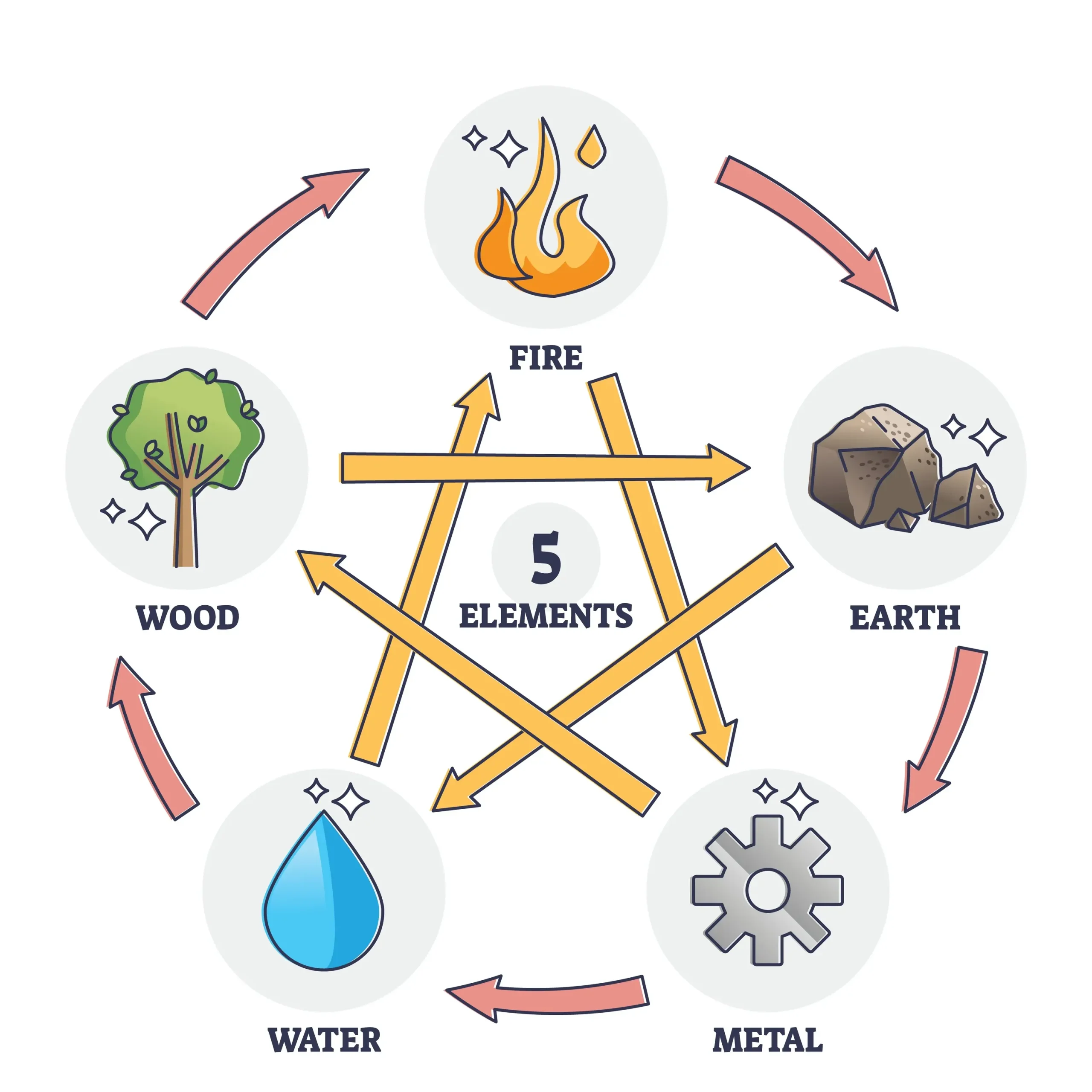
The wuxing elements explained in a single breath: Wood, Fire, Earth, Metal and Water are five phases of moving energy, not five physical substances. Wood expands, Fire rises, Earth stabilizes, Metal contracts, and Water flows downward. Each phase describes a quality of change you can observe in seasons, in rooms and in your own moods.
Classical Chinese texts define each phase with striking economy. Wood is “bending and straightening” — the unstoppable push of spring growth. Fire is “blazing upward” — heat, light and ascension. Earth is “sowing and reaping” — the ground that receives, nourishes and holds. Metal is “following and changing” — refinement, contraction and harvest. Water is “moistening downward” — flow, depth and introspection.
Every element also owns a direction in feng shui: East belongs to Wood, South to Fire, West to Metal, North to Water, and the Center to Earth. When we arrange crystal displays in our studio, this compass is still our first reference for reading a room’s energy.
How the Chinese Zodiac Five Elements System Came to Be
Wuxing is older than the zodiac animals. Scholars trace the five phases back to ancient Chinese astronomy and calendar-making, when the year was divided into five seasons — spring, summer, late summer, autumn and winter — each governed by one element.
The thinker who popularized the system was Zou Yan of the School of Naturalists, one of the nine great schools of the pre-Qin era. His Five Virtues cycle argued that dynasties rose and fell as their governing element yielded to the next in sequence, and it carried wuxing thinking into medicine, architecture and statecraft, and eventually into the Chinese zodiac five elements associations we use today.
How to Find What Is My Chinese Element
If you are wondering what is my chinese element, take the last digit of your birth year: 4 or 5 means Wood, 6 or 7 means Fire, 8 or 9 means Earth, 0 or 1 means Metal, and 2 or 3 means Water. One caveat — the Chinese year begins at Lunar New Year in late January or mid-February, so if you were born in January or early February, confirm the exact date first.
Here is a worked example within the Chinese zodiac five elements system. Someone born in October 1992 has a year ending in 2, which maps to Water — a Water Monkey. Fast-forward to 2026: the year ends in 6, so it is a Fire year paired with the Horse. A Fire Horse year like 2026 reads as dynamic and high-visibility — exactly the nuance your animal alone cannot tell you. Your animal also adds a fixed element layer of its own, which is where the chart below becomes useful.
Chinese Zodiac Elements Chart: Animals, Fixed Elements and Recent Years
The chinese zodiac elements chart works on two levels you should never confuse. The birth-year element (from the last digit above) colors the whole year, while each animal carries its own fixed element rooted in the traditional two-hour time system. Both layers interact, which is why two Roosters born twelve years apart can feel nothing alike.
- Rat — Water
- Ox — Earth
- Tiger — Wood
- Rabbit — Wood
- Dragon — Earth
- Snake — Fire
- Horse — Fire
- Goat — Earth
- Monkey — Metal
- Rooster — Metal
- Dog — Earth
- Pig — Water
Recent birth years at a glance: 2020 Metal Rat, 2021 Metal Ox, 2022 Water Tiger, 2023 Water Rabbit, 2024 Wood Dragon, 2025 Wood Snake and 2026 Fire Horse. Reading the Chinese zodiac five elements this way — animal plus year element — is the quick two-step method we teach customers choosing a meaningful piece.
Five Elements Personality Traits: What Your Element Says About You
Five elements personality traits in the Chinese zodiac five elements tradition are best read as tendencies, not verdicts. Think of your element as your default setting under pressure — the strategy your energy reaches for first when life pushes.
Wood Personalities: Growth in Motion
Wood people plan, grow and push forward — the phase of spring. They are ambitious, idealistic and quick to start new projects. Their challenge is patience: spring saplings cannot be ordered to become trees by August. Green stones such as aventurine or malachite resonate with this expansive energy and gently remind Wood types that growth keeps its own calendar.
Fire Personalities: Warmth That Rises
Fire people are the spark in the room — expressive, charismatic and driven by passion. Ruled by the summer phase of heat and ascension, they inspire others almost accidentally. Their challenge is burnout: flames that climb too high consume their own fuel. Cooling, grounding companions like aquamarine help Fire types stay brilliant without scattering, especially during an already fiery year like 2026.
Earth Personalities: The Grounded Nurturer
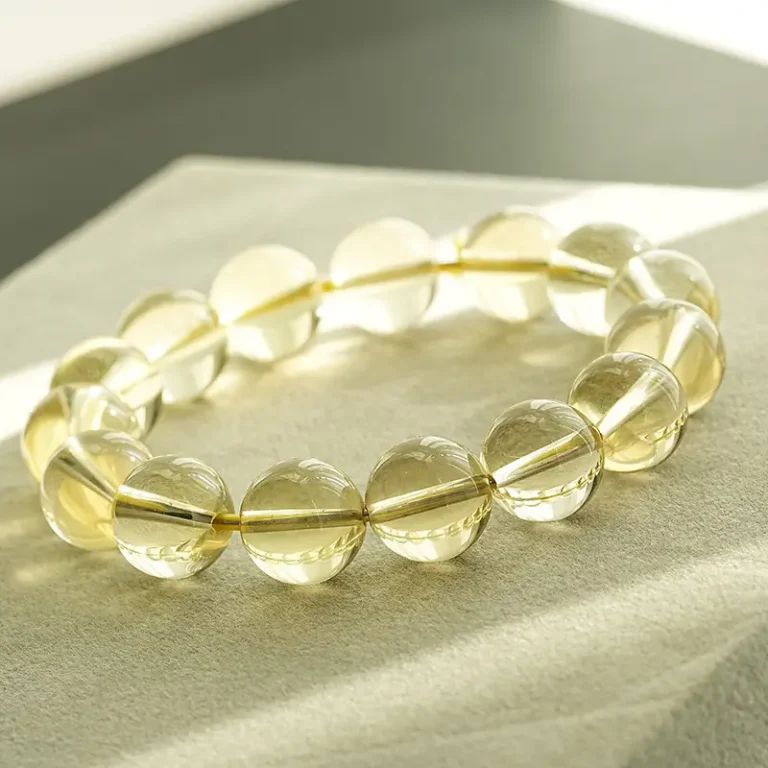
Earth people stabilize everyone around them. Linked to late summer — the season of harvest and nourishment — they are dependable, patient and fiercely loyal. Their challenge is over-giving until their own field lies empty. Warm yellow stones such as citrine or tiger eye suit this element beautifully, returning some of the sunshine Earth types spend on others.
Metal Personalities: The Quiet Refiner
Metal people value precision, standards and clarity. The autumn phase of refinement and contraction shows in their elegance, their honesty and their low tolerance for clutter, physical or emotional. Their challenge is rigidity: a blade tempered too hard will chip. Softer luminous stones like moonstone or rose quartz round Metal’s edges without dulling its shine.
Water Personalities: Depth and Flow
Water people think in depth. Aligned with winter — flow, introspection and quiet power — they are perceptive, adaptable and often wise beyond their years. Their challenge is withdrawal: still water grows cold. Warm anchors like red agate or garnet give Water types gentle momentum when reflection slides into isolation.
| Element | Core traits | Crystal gift direction |
|---|---|---|
| Wood | Growth, vision, planning | Green jade, green phantom quartz |
| Fire | Passion, visibility, connection | Red agate, carnelian |
| Earth | Stability, nurture, patience | Yellow jade, citrine |
| Metal | Structure, clarity, boundaries | White jade, clear quartz |
| Water | Wisdom, flow, rest | Aquamarine, blue tiger’s eye, obsidian |
How the Generating and Controlling Cycles Shape Compatibility
No element exists alone. The Chinese zodiac five elements interact through two loops, and understanding them turns a list of traits into a living system you can actually use. For the stone itself, our jade meaning guide goes deeper.
The generating cycle feeds forward: Wood fuels Fire, Fire creates Earth (ash), Earth bears Metal, Metal collects Water, and Water nourishes Wood. In practice, a Water partner genuinely strengthens a Wood person’s growth — a pairing traditional matchmakers loved, and when we help couples choose paired bracelets in our studio, we still reach for this loop first.
The controlling cycle keeps balance: Wood parts Earth, Earth dams Water, Water douses Fire, Fire melts Metal, and Metal chops Wood. Control sounds negative, but it is regulation — the brake pedal, not the enemy. The deeper principle is yin and yang energy: opposites wax and wane, and extremes turn into their opposite, just as the ancient physicians observed that intense cold itself generates heat. Balance, not dominance, is always the goal.
Choosing Element-Matched Crystal Gifts People Actually Feel
Element-based gifting is the most practical payoff of the Chinese zodiac five elements — and the reason we keep a worn chart by our workbench. The traditional color logic is simple: green belongs to Wood, red to Fire, yellow to Earth, white to Metal, and black or deep blue to Water. You can see this palette running through our full healing stones and crystal jewelry guide.
- Wood — green aventurine, malachite, or a piece rich in tree of life symbolism like the designs in our tree of life guide.
- Fire — carnelian and red agate; red cinnabar jewelry carries deep roots in tradition, as our cinnabar in feng shui guide explains.
- Earth — citrine, tiger eye and yellow jasper for steady warmth.
- Metal — clear quartz, moonstone and white-toned beads for clarity.
- Water — black obsidian, aquamarine and lapis lazuli for depth.
One practical tip before you buy: check a stone’s durability on an authoritative source such as the Gemological Institute of America (GIA), especially if the gift will be worn daily. We often recommend softer stones for pendants and reserve hardier beads for bracelets that live on the wrist. At 69player, every piece is designed around the Yin 6 / Yang 9 balance — stillness and movement held in one design — so the piece works with the wearer’s rhythm, whichever element you gift.
If you want a starting point, our Five Elements Bracelet combines crystal and wood beads around the generating cycle, and the Green Crystal Wood Element Bracelet is a focused choice for Wood-year readers.
Frequently Asked Questions About the Chinese Zodiac Five Elements
Quick answers to the questions our customers ask most about the Chinese zodiac five elements and element-based gifting.
Which Chinese zodiac element rules 2026?
2026 is a Fire Horse year. The year ends in 6, which maps to Fire, and the Horse is itself a Fire animal — a double-fire combination that traditional readers describe as energetic, visible and fast-moving. It favors launching projects and bold expression — and Fire types benefit from one cooling, grounding stone to keep the flame steady rather than wild.
Can my Chinese zodiac element change over time?
Your birth-year element never changes — it is fixed the moment you are born. What shifts is the yearly element around you. A Wood person entering a Metal year feels friction, while the same person in a Water year feels fed and supported. This ebb and flow reflects the classical law of waxing and waning balance: no phase stays dominant forever, which is why we refresh our bracelets rather than replace our nature.
How do I gift by element when I only know the person’s animal?
Use the animal’s fixed element as your starting point: a Rabbit friend is Wood, so lean green; a Rooster colleague is Metal, so lean white and luminous. When in doubt, choose a balanced design rather than a single-element piece — balance flatters every element, which is precisely the philosophy behind our Yin and Yang collections. The animal tells you the door; the element tells you which key to bring.
Living in Rhythm With the Five Elements
The Chinese zodiac five elements are not a personality test you take once and forget. They are a rhythm — five ways energy moves, five seasons inside one year, five strategies inside one person. Learn your element, learn the element of the year, and you gain a quiet framework for timing your launches, your rest and your gifts. Two and a half thousand years after Zou Yan, it remains an efficient way to stay in step with the world — and with yourself.
Explore Further
To see how the elements sit inside the yin-yang framework, read the taiji symbol meaning. If you are choosing a first piece, the crystal gift guide for beginners covers sizing and packaging, and the 24-hour energy guide shows how to use the elements across a normal day.