Cinnabar Stone Meaning in Feng Shui

Cinnabar stone meaning in feng shui is traditionally linked to red yang energy, wealth and protection. The stone is a symbol and a ritual anchor, not a guaranteed lucky charm. It also deserves careful handling: cinnabar is mercury sulfide, so never heat it, grind it, burn it or ingest it. This guide covers the mineral facts, the feng shui symbolism, safe placement, wearing and cleansing, and what cinnabar can and cannot do.
Cinnabar meaning at a glance
- In feng shui, cinnabar is a red yang stone associated with visibility, boundaries and active opportunity.
- Traditional readings connect it with wealth, protection and confidence. These are cultural meanings, not promised outcomes.
- Cinnabar is mercury sulfide. Keep jewelry dry and never heat, grind, burn or ingest it.
For a wearable example, see the Red Cinnabar Fish Earrings. The product page lists the materials, care and shipping details.
What Is Cinnabar?
Cinnabar is the mineral form of mercury sulfide, with the chemical formula HgS. Webmineral’s cinnabar data lists it as roughly 86% mercury and 14% sulfur by weight, with a hardness of 2–2.5, an adamantine luster and a bright red streak. Those facts matter for two reasons: they explain the intense color, and they explain why cinnabar should be treated as a mineral with real handling limits.
Most jewelry cinnabar is carved from massive material rather than transparent crystals. The color can range from bright vermilion to a deeper brick red, and natural pieces may show small pits, tonal variation or carving marks. A smooth, sealed surface is normal in finished jewelry; loose powder, rough carvings and damaged coatings should not be handled casually.
Cinnabar contains mercury. Heating, grinding or burning it can release mercury vapor, and it should never be ingested or used to flavor food or drink. Keep cinnabar away from children and pets, do not sand or repair a damaged piece yourself, and stop wearing a piece if the surface is cracked or flaking. If you are pregnant or have a specific health concern, ask a qualified professional before wearing raw or damaged cinnabar.
Cinnabar Stone Meaning in Feng Shui
In feng shui symbolism, cinnabar is a red, fire-associated stone. Red is the color of visibility, celebration and activation; in the five elements, the south is Fire and the south is yang. Cinnabar is therefore used as a yang object: a visual signal for movement, attention and boundaries rather than for rest and retreat.
Traditional readings give cinnabar three main roles. It is a wealth stone in the sense of active opportunity, a protection stone in the sense of a red boundary, and a confidence stone in the sense of visibility. None of those roles is a promise. A stone cannot create money, repair a relationship or remove a real-world risk. It can, however, act as a daily reminder of the intention you have chosen.
The five elements and wuxing guide is useful here. Cinnabar’s red color fits the Fire phase, traditionally associated with warmth, recognition and expansion. If your space already feels overheated or cluttered, adding more red is not automatically balancing; feng shui is a system of relationships, not a one-stone answer.
Cinnabar Benefits in Traditional Practice
The traditional cinnabar stone meaning is usually divided into three themes: wealth, protection and visibility. Treat them as cultural lenses rather than separate guarantees.
Wealth and abundance
Cinnabar was historically called a merchant’s stone in some Chinese folk traditions. A small piece might be kept near a cash drawer, a shop counter or the wealth corner of a home. The logic is symbolic: red activates attention, and attention supports opportunity. It is not a substitute for pricing, inventory or marketing.
Protection and boundaries
Red amulets appear across many cultures, and cinnabar is one of the oldest red mineral pigments. In modern practice, the protection reading is best kept psychological: the stone marks a boundary or a decision not to absorb every demand. Our guide to protective stones compares that symbolic role with obsidian, tourmaline and other materials. If you are packing for a trip, our travel protection guide covers the portable version.
Visibility and confidence
Because red is visually dominant, cinnabar is sometimes worn for presentations, interviews or social occasions when the wearer wants to feel more present. The effect is partly the color and partly the ritual of putting on a specific piece. If you dislike attention, a large red necklace may be the wrong tool; a small pair of earrings or a single bead can carry the same reminder without taking over the room.
Cinnabar Crystal Properties and Quality
These are the mineral facts worth knowing before you buy. They also explain why cinnabar needs different care from quartz or amethyst.
| Property | Cinnabar |
|---|---|
| Chemical formula | HgS (mercury sulfide) |
| Color | Vermilion to deep brick red; may be uneven in natural carvings |
| Hardness | 2–2.5 on the Mohs scale; softer than a fingernail can scratch |
| Luster | Adamantine in crystals; carved pieces are usually polished |
| Streak | Bright red |
| Specific gravity | About 8.19, noticeably heavy for its size |
| Care | Dry soft cloth only; no water, salt, ultrasonic cleaner or heat |
Quality is mostly about the carving and the finish. Look for crisp details, even thickness and a smooth surface without white powder in the recesses. Ask whether the piece is natural cinnabar, reconstituted cinnabar or a composite with a cinnabar-colored surface. A sealed finish is common in jewelry; a chalky or flaking finish is a reason to stop wearing the piece.
How to Use Cinnabar in Feng Shui
The wealth corner
Stand at your front door and look inward; the far-left corner is commonly treated as the wealth corner in the Black Hat school. Clear the surface, remove clutter and place one small cinnabar object on a tray or dish. A single piece is enough. The intention is to create a focal point for opportunity, not to fill the corner with red objects until it feels chaotic.
The entryway
An entryway is a threshold, which makes it a natural place for a boundary symbol. A small cinnabar dish or carved piece on a console can mark the shift from public to private space. Keep it out of direct sunlight, away from radiators and out of reach of children and pets. If the piece is damaged or powdery, do not keep handling it as a decorative object.
The desk
On a desk, cinnabar works as a visibility anchor: a small object you see before a meeting, a pitch or a difficult conversation. Place it beside your screen and keep the surface clear. Some practitioners avoid cinnabar in the bedroom because it is strongly yang; others use a very small piece. That is a preference, not a universal rule.
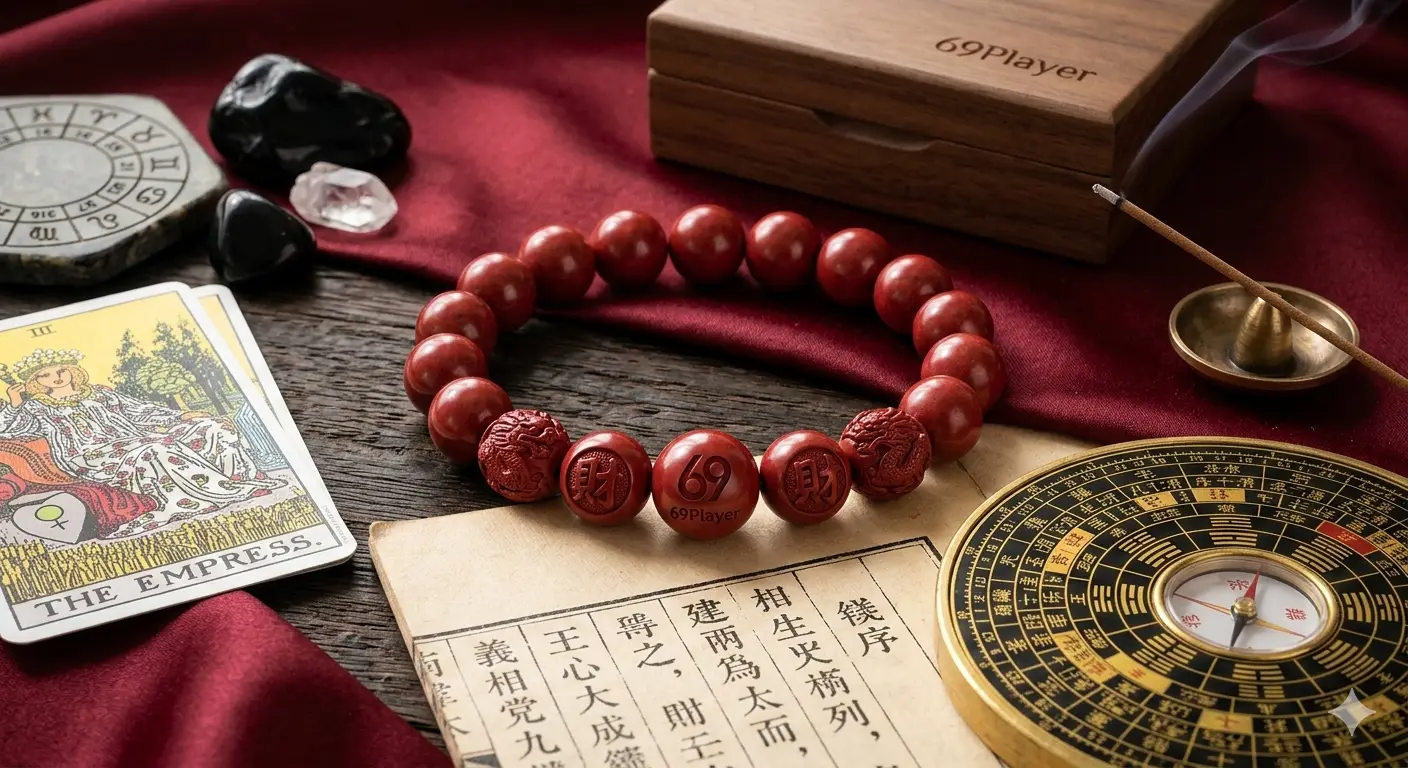
How to Wear a Cinnabar Bracelet
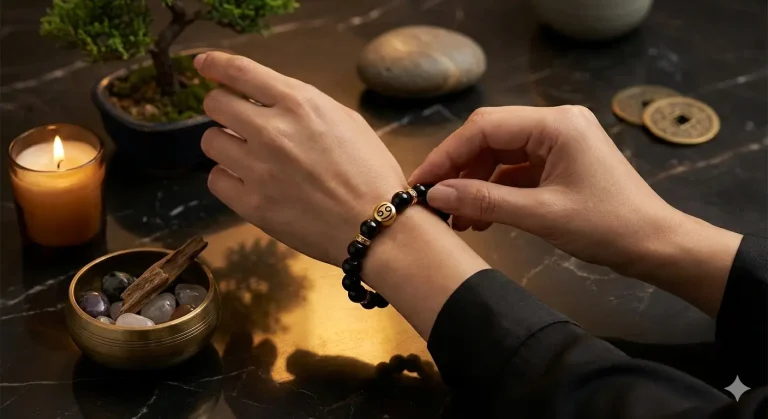
Some traditions wear cinnabar on the left wrist as the receptive side; others choose the right or ignore the rule. There is no universal placement that changes the mineral’s properties. Choose a wrist that is comfortable and that keeps the bracelet away from the hand you use for cooking, cleaning or heavy work.
For jewelry, the surface matters more than the folklore. Choose smooth, sealed beads without cracks or powdery areas. Remove the bracelet before swimming, showering, exercise, washing dishes or handling harsh cleaners. Avoid heat, including saunas, hot springs and direct sunlight for long periods. If the coating is damaged, stop wearing it and do not try to sand or polish the exposed material yourself.
A cinnabar bracelet is a strong yang accessory, so it pairs naturally with a quieter practice: one clear intention, one moment of pause, one action you actually take. If you prefer a lighter red option for everyday wear, a red string bracelet is a different material with a different care profile; our red string protection guide explains that tradition separately.
How to Cleanse and Care for Cinnabar
Cinnabar is not a water-friendly stone. Do not soak it, use salt, use an ultrasonic cleaner or apply harsh chemicals. A dry soft cloth is the safest everyday care. If the piece has a sealed finish, wipe it gently and store it in a dry pouch away from harder stones that could scratch the surface.
If your practice includes moonlight, sound or smoke, those methods can be used as rituals around the object without wetting it. Keep the smoke brief and avoid direct flame or heat. Inspect the piece regularly for cracks, flaking or white powder in the carving. A damaged cinnabar piece should be retired from skin contact rather than repaired with household tools. Our crystal bracelet cleansing guide covers the wider care routine for other stones.
Cinnabar vs Red String vs Garnet
These red objects are often grouped together but are not interchangeable. Compare them by symbolic use and practical care, not by which one is “stronger.”
| Object | Traditional reading | Practical note |
|---|---|---|
| Cinnabar | Fire, yang, wealth and protection | Use dry care only; avoid heat, water and damaged surfaces |
| Red string | Blessing, connection and a simple boundary | Light, inexpensive and easy to replace; often tied to a vow or intention |
| Garnet | Grounding, vitality and steady warmth | Durable enough for daily wear; clean with mild soap and water |
What Cinnabar Can and Cannot Do
Cinnabar can serve as a visual anchor for an intention, a cultural connection to red amulets and a reminder to act with more visibility or boundaries. It can make a ritual easier to remember and give you a physical cue before a meeting, a negotiation or a social occasion.
It cannot guarantee wealth, make someone trust you, cure an illness or remove a real-world hazard. It is not a medicine and should not be ingested, heated or ground. If you are dealing with a financial, medical or safety problem, use the appropriate professional tool for that problem. The stone belongs to the symbolic layer, and the symbolic layer works best when it supports practical action.
Choosing a Cinnabar Piece
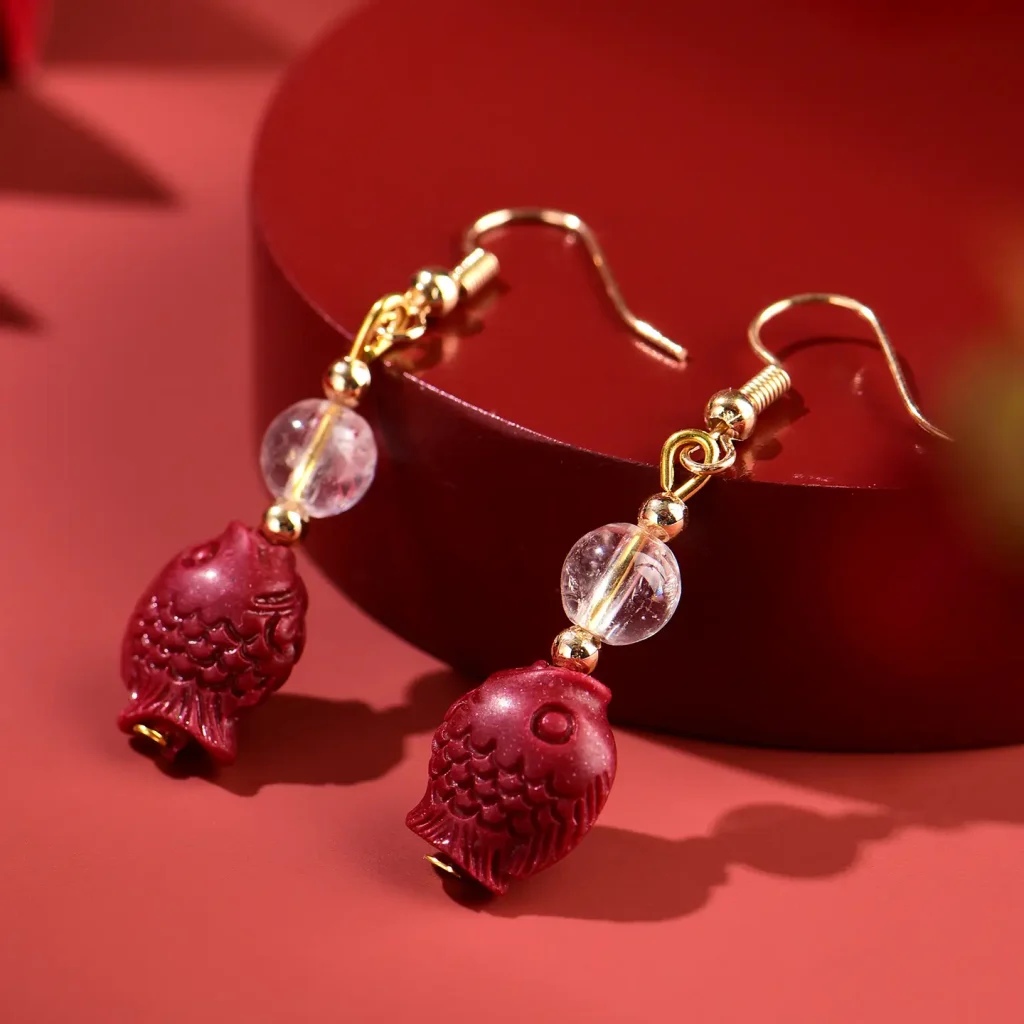
In our studio, we look at three things before wrapping a cinnabar piece: the color in daylight, the crispness of the carving and the condition of the surface. A deep, even red is attractive, but a sealed, smooth finish matters more for daily wear. Ask about material and treatment, and choose a piece you can handle safely rather than the largest carving.
Our Red Cinnabar Fish Earrings are a small, wearable interpretation of the red protection tradition. If you want to compare other red and protective pieces, browse the protection collection before deciding. For a piece that will be worn often, prioritize a comfortable weight and a secure fitting over an elaborate design.
Frequently Asked Questions
Is cinnabar safe to wear?
Polished, sealed cinnabar jewelry is commonly worn, but it still contains mercury sulfide. Avoid raw, powdered, cracked or flaking pieces; never heat, grind or ingest cinnabar; keep it away from children and pets. If you are pregnant or have a specific health concern, ask a qualified professional before wearing it.
Can cinnabar go in water?
No. Keep cinnabar dry. Do not soak it, use salt water, use an ultrasonic cleaner or apply harsh chemicals. Wipe it with a soft dry cloth and store it away from heat, moisture and harder stones.
What does the cinnabar stone meaning in feng shui refer to?
It is traditionally read as a red, yang, fire-associated stone connected with wealth, protection and visibility. Those are symbolic associations, not guarantees. The useful practice is the intention you attach to the piece and the action you take afterward.
Where should I place cinnabar?
Common placements are the wealth corner, entryway console or desk. Keep it out of sun, heat, moisture and the reach of children and pets. Some practitioners avoid bedrooms because cinnabar is strongly yang.
Is cinnabar the same as red jade or carnelian?
No. Cinnabar is mercury sulfide. Red jade is jadeite or nephrite, and carnelian is a variety of chalcedony. They can share a red color and similar folk associations, but their mineral makeup and care requirements are different.
Conclusion: Use the Red, Keep the Discipline
At 69player, cinnabar fits the Yang 9 side of the yin-yang balance: visible, warm and activating. The cinnabar stone meaning in feng shui works best when it is paired with the Yin 6 discipline of care, restraint and honest limits. Choose one small piece, give it a clear intention, keep it dry and handle it safely. That is a more grounded relationship with cinnabar than treating it as a charm that does the work for you.