Feng Shui Entryway: Where Yang Hands Over to Yin at Your Door

A feng shui entryway is not a shrine and not a checklist of objects. It is the ten seconds where the outside stops and the home begins, and classical Chinese thought has a precise name for what happens in those seconds: yang hands over to yin. Motion becomes stillness, speed becomes attention, the street becomes the house. Everything worth doing at a front door follows from that one transition, and very little of the popular advice about coins, bowls and mirrors follows from anything at all.
We are careful with this subject because the classical sources are specific and the modern internet is not. The compass attributions in this guide come from the same body of material as the rest of our writing: East is Wood, South is Fire, West is Metal, North is Water and the Center is Earth. What we will not do is tell you that a particular plant, coin or mirror carries a particular element, because that is not in the sources we trust, and inventing it would be worse than leaving it out.
What Is a Feng Shui Entryway For?
A feng shui entryway exists to make the handover between outside and inside deliberate. The street is yang: moving, busy, outward-facing. A home is meant to be the yin side of that pair: still, cool, inward. The entrance is the hinge between them, so it is judged by how well it lets the first become the second, not by what it holds.
Why the handover matters more than the objects
The classical senses are unusually practical here. Stillness is yin and motion is yang. Mountains are yin and water is yang. The south is yang and the north is yin, warmth is yang and cold is yin. An entrance that is loud, glaring and full of half-finished errands forces yang to keep running indoors, which is precisely what an evening is supposed to end. An entrance that is dim, blocked and unused does the opposite and gives you no place to put the day down. The first of the three classical laws, opposition within unity, is the one to remember: the two halves are not enemies, they take turns, and the doorway is where the turn happens.
If you want the concept underneath the compass logic rather than the folk practice around it, the Stanford Encyclopedia of Philosophy’s entry on metaphysics in Chinese philosophy treats yin, yang and the five phases as a working system rather than a set of decorations. Everything below stays with what the classical material actually supports.
Front Door Feng Shui: The Three Things Worth Changing
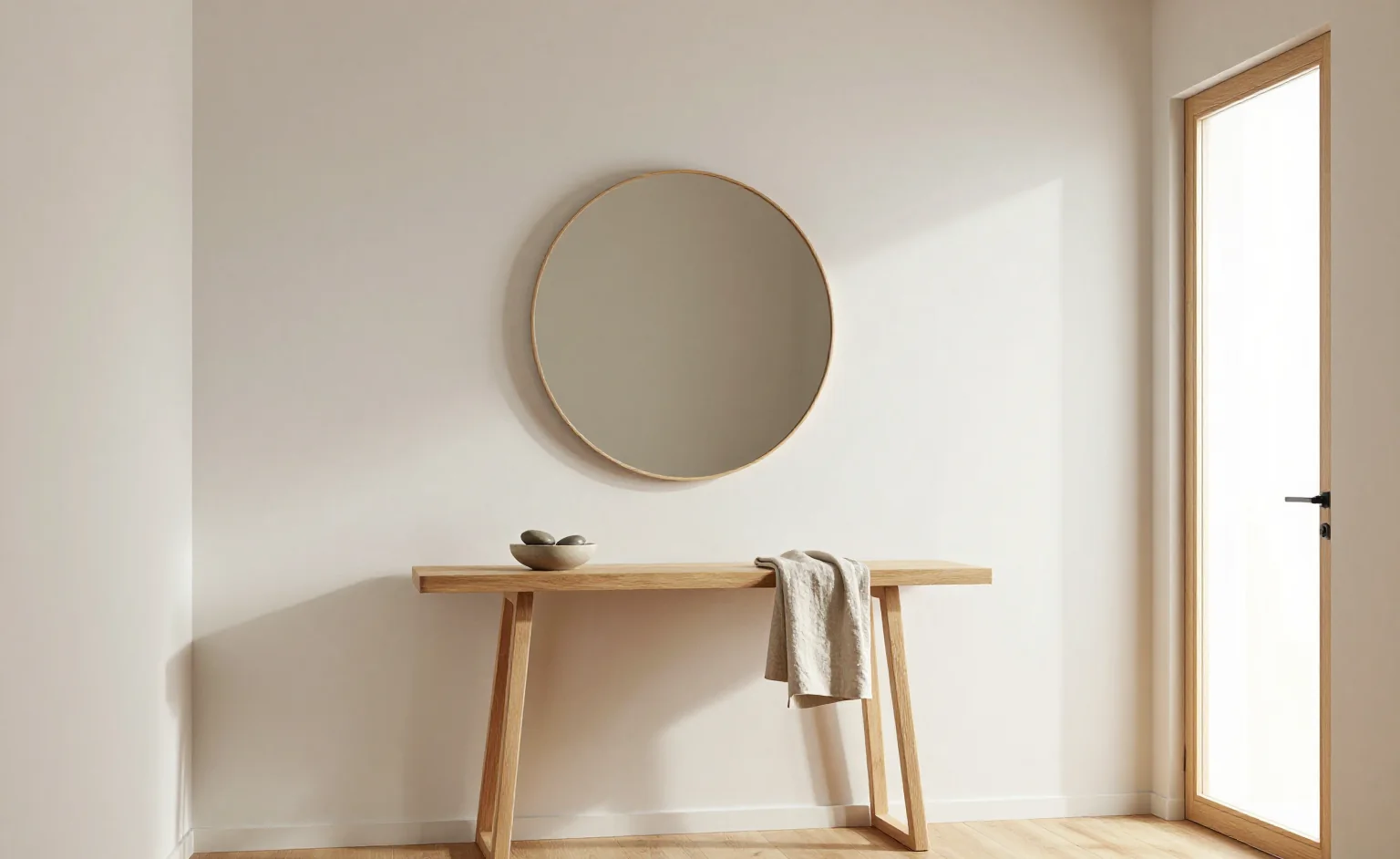
Front door feng shui comes down to three changes that need no shopping: the amount of light, the line of sight, and where you put things down. Our rule of thumb is that a stranger should be able to read the room in one glance and find a surface within two steps.
- Light. A working bulb and a clean glass panel do more than any ornament. Dark entrances read as yin taken too far: still, but also inert.
- Line of sight. Keep the first metre clear. Whatever the door opens onto should be visible from the street side without stepping around anything.
- A landing surface. Keys, bag, post. One surface, at the height you actually use, so the arrival does not spill down the hallway.
None of these three is a spiritual instruction, and we say that plainly. They are the physical conditions that let a pause happen, and the pause is what the tradition is describing. A feng shui entryway that fails all three will fail the rest of the advice as well.
Feng Shui Entryway Direction: East, South, West and North
Feng shui entryway direction is where the classical framework gets specific, and it is worth keeping the attributions straight: East is Wood, South is Fire, West is Metal, North is Water, and the Center is Earth. Seasons follow the same pattern, with Spring as Wood, Summer as Fire, Late Summer as Earth, Autumn as Metal and Winter as Water.
A door that faces east opens onto Wood, the phase of growth and expansion, which suits an entrance that people leave through in the morning. A south-facing door carries Fire, heat and ascension, and reads brighter and more public. West brings Metal, refinement and contraction, better suited to the door you come home through in the evening. North carries Water, flow and introspection, the coolest of the four. The classical day cycle is worth mentioning here too, because it is deliberately lopsided: it divides the hours into four periods, Wood then Fire then Metal then Water, with no Earth period at all. We do not invent one to make the table balance.
What if your door faces an awkward direction?
Nothing needs to happen. You cannot rotate a front door, and the classical material does not ask you to. What you can do is match the finish and the light to the phase the door already has: warmer light and lighter wood where the entrance reads cold and northern, cooler and calmer surfaces where it takes direct afternoon sun. That is a design decision, and we label it as one rather than dressing it up as a citation. The pieces in our collections exist for the same honest reason: they make a chosen rhythm visible.
Entryway Clutter Feng Shui: Why the Pile Stops the Handover
Entryway clutter feng shui is not about tidiness for its own sake. A pile of shoes, post and bags is yang that never got to finish, and it keeps the arrival phase running for hours after you have actually arrived. Clearing it is the single highest-value change in this article, and it costs nothing.
- One in, one out. Shoes that live by the door should be the ones you wear this week.
- Post, twice a week. A ten-minute bin-and-file habit beats any decorative solution.
- Bags belong at the height you drop them. A hook at the wrong height is why things end up on the floor.
- Nothing at the threshold. The first step inside should be empty, always.
If the pile is a symptom of a house with no storage, that is a furniture problem rather than a feng shui one, and our notes on feng shui cures for the home are the practical companion for the rest of the rooms.
Feng Shui Entryway for Small Apartments: The Five-Minute Version
Feng shui entryway for small apartments is a different job, because the standard advice assumes a hallway you do not have. A studio entrance that opens straight into the living space needs one visible pause point, not a console table, a rug and a runner. Five minutes is genuinely enough.
- Clear the sight line to the door. Move whatever sits directly in front of it, even a single chair’s width.
- Choose one surface and keep it single-purpose. A shelf, a stool, a windowsill. It does not have to be a hallway piece.
- Put light where you arrive. One lamp at the entrance side of the room changes how the whole flat feels at night.
- Leave the door’s swing clear. A blocked swing is a blocked handover, in plain physical terms.
In a studio, the bedroom’s placement matters as much as the door, and the compass logic is the same one we use in bed placement: match the room’s existing character instead of fighting it.
What Actually Belongs at the Door
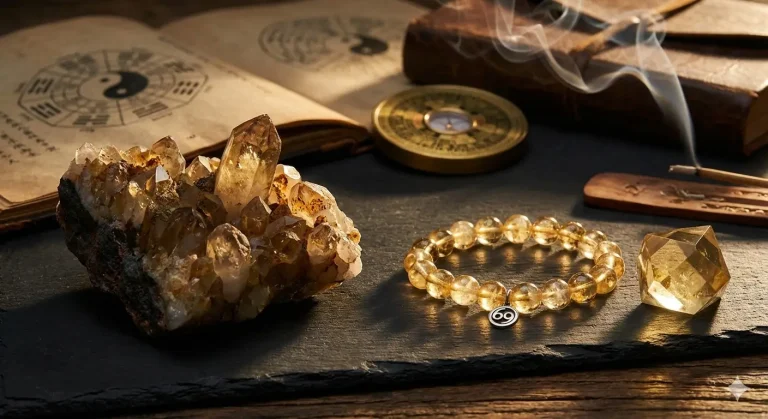
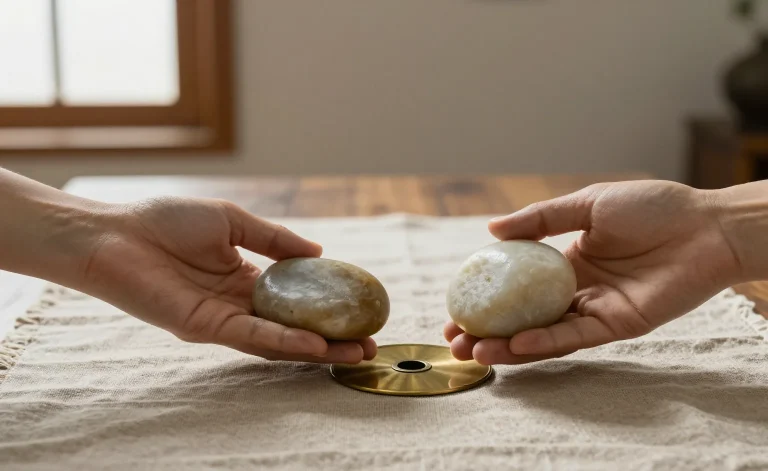
What belongs at a feng shui entryway is whatever makes the pause easy and nothing that makes it a display. In our own studio we keep a bowl for keys, one stone with enough weight to feel in the palm, and a folded cloth. That is the whole list. If you want a stone with a specific character rather than a generic one, the placement logic we use for crystals in the home applies at the door as well, with the same caveat: we describe weight, colour and surface, not invented element assignments.
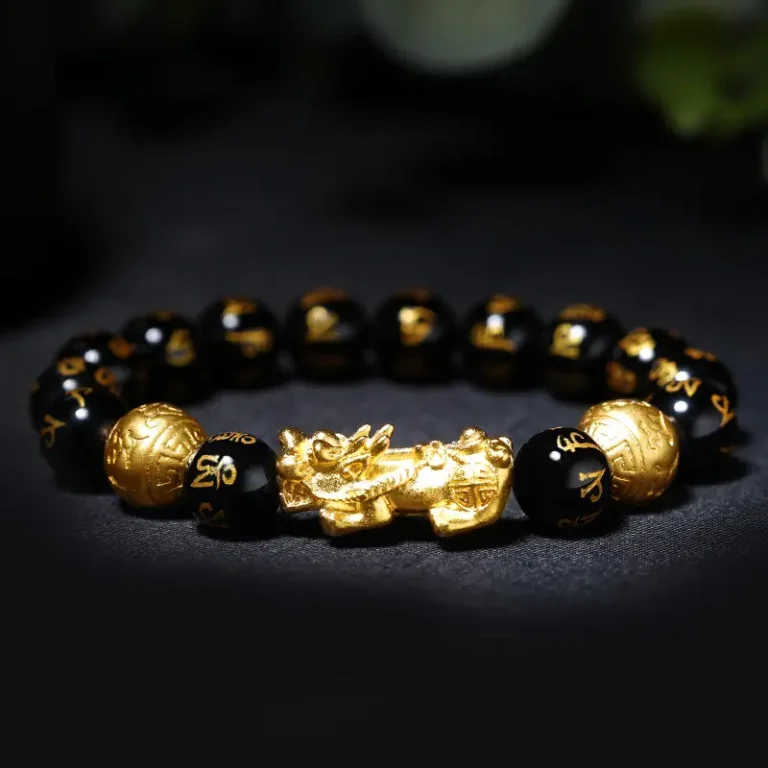
A bracelet earns its place for a similar reason. It is a reminder you put on rather than a reminder you have to remember, and the moment of putting it on fits the ten seconds at the door better than anything that sits on a table. That is the test we apply to any feng shui entryway before we photograph one.
Quick Answers About the Entryway
Is a mirror by the front door bad?
No, and the classical sources we rely on do not say otherwise. The mirror question comes from a later folk tradition, and the honest answer is that a mirror is a design decision: it doubles the light in a dark hall, and it can also catch a door swing and an ugly reflected view. Judge a feng shui entryway by what the glass actually reflects, not by a list of forbidden objects.
Does the entrance have to face a certain way?
No. The compass attributions describe the character a direction already has, they are not a rule about which doors are allowed. A north-facing entrance is cool, still and inward; a south-facing one is bright and public. Both are workable, and both are easier to live with when the finish and lighting agree with them.
What should go in the bowl by the door?
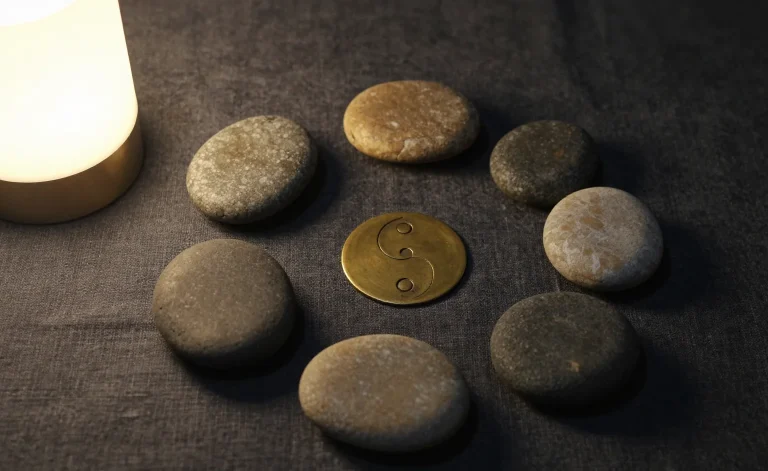
Keys, and not much else. If you like having something to touch on the way out, one stone is enough; two or three smooth stones are how most people end up using it, which is exactly what you can see in the photograph above. A full bowl of coins is a modern habit, not a classical instruction.
Where the 6 and the 9 Meet
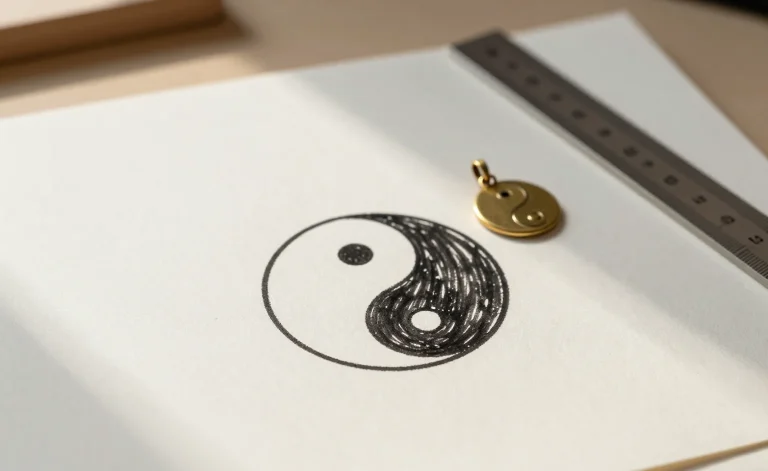
This is the reading we keep coming back to at 69player. In the classical pattern, yang is the odd, active nine and yin is the even, receptive six, and the whole practice lives in the handover between them. A feng shui entryway is that handover made physical: a few square metres where movement is allowed to become stillness, on purpose, every single day. That is what we mean by the Yin 6 and Yang 9 balance, and it is why our own door is the least decorated part of the studio.
Start with one change this week: clear the threshold and put a light where you arrive. If you want a second opinion on which end of the day your house is actually built for, the oracle tool asks a single question rather than a questionnaire. The rest is sequence, and sequence is free.
Continue Reading
For the room-by-room version, read the feng shui crystal placement guide. The kitchen heat-and-water guide covers the next room in the sequence, and the seasons as a handover widens the same idea to the year.