Yin and Yang Balance: A 24-Hour Energy Rhythm Guide

Yin and yang balance sounds like a tidy diagram: half light, half dark, split cleanly down the middle. Real days rarely look like that. Some mornings you wake up already behind, and some evenings you are wired at eleven at night with a laptop balanced on your knees. If that sounds familiar, start with the evening ritual for calm.
Here is the part most wellness advice skips. Classical Chinese thought never described yin and yang balance as a fixed 50/50 score to be defended. It described two movements, stillness and motion, that take turns leading, and the whole skill lies in noticing which one your body is asking for right now. In this guide we map the classical day cycle onto an ordinary working day, so you can adjust your energy instead of fighting it.
What Does Yin and Yang Balance Actually Mean?
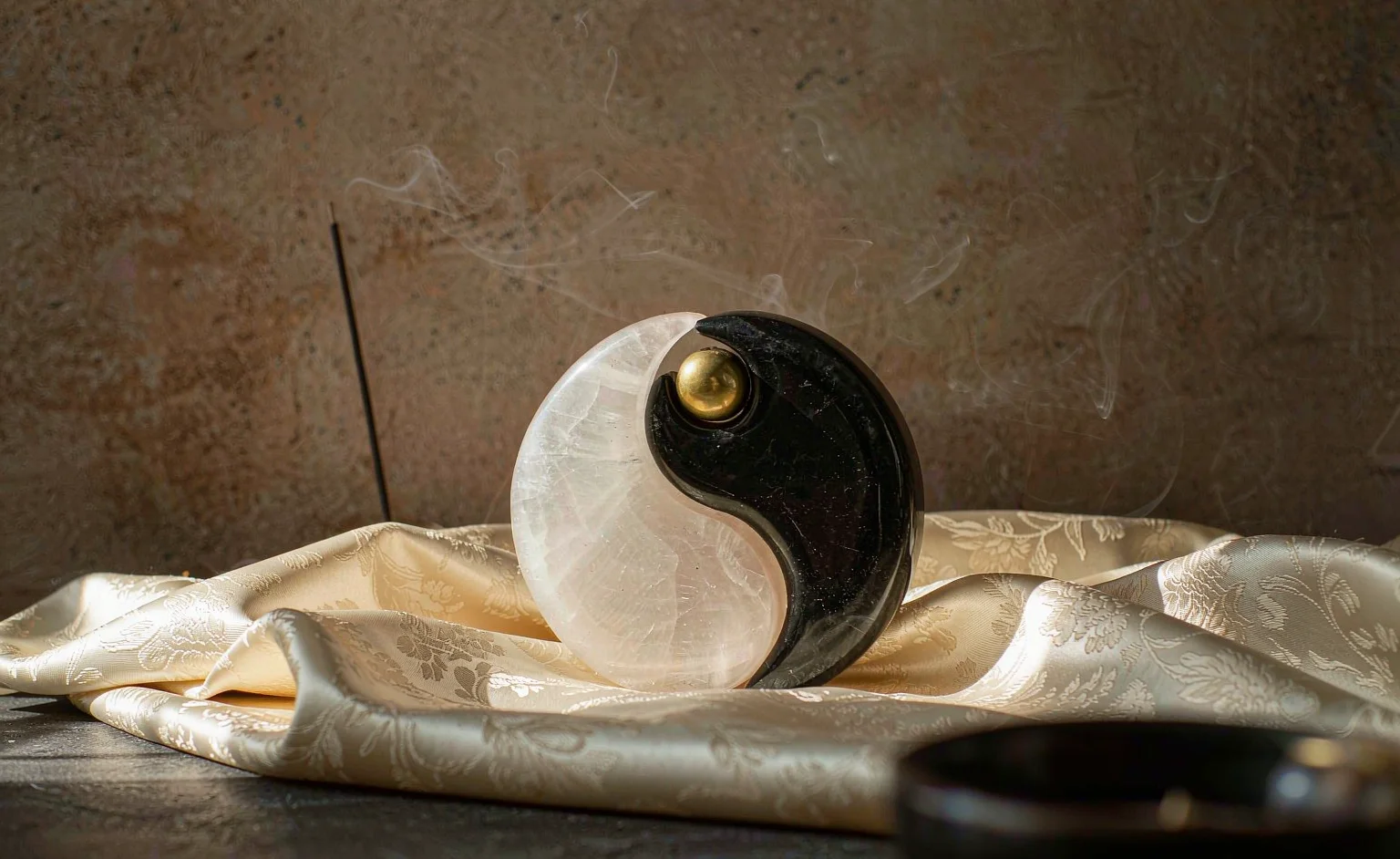
Yin and yang balance is the condition in which stillness and motion each get the time they need, in the order your body can use them. Yin is the resting, cooling, inward phase; yang is the moving, warming, outward phase. Balance is a rhythm, not a ratio.
That distinction matters because it changes what you are aiming for. If yin and yang balance were a ratio, a hard day would have to be paid back with an equally hard evening of rest, and any disruption would feel like failure. If it is a rhythm, a heavy meeting block simply asks for a different kind of time later. The sequence does the work.
The two movements behind every energy shift
The oldest definitions are almost physical. Stillness is yin, motion is yang. Mountains are yin and water is yang, because water moves. The south is yang and the north is yin; warmth is yang and cold is yin. Read that way, yin and yang balance becomes a scheduling question rather than a personality trait. You do not need a philosophy degree to use it. You only need to ask whether the next hour is asking you to move or to settle, and then to stop treating the two as competing virtues. In our studio we keep a simple rule on the wall: do not pay for yang hours with yin hours. A sprint is fine; a sprint that eats your evening is not.
How to Balance Yin and Yang Through a Normal Working Day
How to balance yin and yang in practice comes down to timing rather than willpower. The classical day cycle runs roughly three hours to nine in the morning as Wood, nine to three as Fire, three in the afternoon to nine at night as Metal, and nine at night to three as Water. Schedule demanding, outward work inside the Fire block, and protect the later blocks for winding down.
Notice that this is a schedule built for humans who sleep, not for machines that run. Each phase has a different quality, drawn from the five elements: Wood is growth and expansion, Fire is heat and ascension, Metal is refinement and contraction, Water is flow and introspection. It is also the clearest everyday demonstration of yin and yang balance available to anyone who owns a calendar.
Why does the morning feel easier than the afternoon?
Morning belongs to Wood, the phase of growth and unfolding, which is why new plans feel obvious before lunch and slightly ridiculous after it. Wood is the energy of starting. It rewards movement, first drafts, and anything that needs expansion rather than polish. If you have ever tried to begin a difficult project at six in the evening and wondered why the idea felt thin, the answer is usually sequencing rather than discipline. The Wood hours were twelve hours earlier, and you spent them on email.
The three o’clock turn: when the day starts asking for yin
Fire runs from about nine to three, and it is the most yang stretch of the working day: heat, visibility, conversation, output. Then the cycle shifts into Metal, which is refinement and contraction. Metal is for editing, reviewing, trimming, and finishing what Fire started. This is the single most useful timing insight we give clients. Instead of forcing new creation into the late afternoon, hand the same hours a smaller job with a defined end. Editing is genuinely Metal work, and it will feel easier than starting. When you fight this turn, you end the day with six open tabs and no finished task.
A Yin Yang Daily Routine That Survives Real Life
A yin yang daily routine fails when it is written for an ideal week. The version below assumes interruptions, and it survives them because each piece is independent.
- On waking: two minutes of stillness before your first screen. Yin first, so the yang hours have something to spend.
- Before noon: one piece of expansion work, begun rather than perfected.
- Early afternoon: your most outward block. Meetings, calls, launches.
- Late afternoon: Metal work. Editing, tidying, closing loops, deciding what will not happen today.
- Evening: a deliberate drop in stimulation, not a collapse into scrolling.
Two of these five items will happen on any given day, and that is enough. The routine is not a checklist to complete; it is a shape to return to. Kept loosely, this is what yin and yang balance looks like on an ordinary Tuesday: nothing dramatic, just the right phase in the right hour.
This is also the reason we built our oracle tool around a single question rather than a long questionnaire: the useful decision is usually which mode you are in, not a detailed life plan. If you want the wider philosophy behind this sequencing, our guide to restoring balance in modern life walks through it in more depth.
Yin and Yang in the Home: Room by Room
Yin and yang in the home follows the classical compass attributions. East is Wood, South is Fire, West is Metal, North is Water, and the Center is Earth. These are not decoration rules. They are a way of noticing what a room is already good at.
Practically, yin and yang balance in a house is about matching a room’s natural quality to the activity you put inside it. South-facing rooms hold the most yang heat and light, so they suit the spaces where people gather and talk. North-facing rooms are cooler and more yin, which makes them a natural fit for study, reading, and quiet work. A west room carries Metal’s contracting quality and works well for closing down the day. If you want to go deeper into the elemental logic, our explainer on the five elements and wuxing covers the generating and controlling cycles.
The bedroom is the most yin room in the house
Whatever else you change, treat the bedroom as the yin room and defend it. Screens bring yang light and yang motion into the one space designed for stillness, and their effect compounds because the room is used every night. Keep the bed’s function narrow, lower the light in the last hour, and let the room stay uninteresting. Boring bedrooms are usually well-designed bedrooms.
Can a Yin Yang Sleep Cycle Fix Your Evenings?
A yin yang sleep cycle works because the Water hours between nine at night and three in the morning are genuinely different in quality, and Water is the element of flow and introspection. Treating that window as a continuation of your working day keeps you in yang long past the point where it can be spent.
The good news is that the fix is subtractive rather than additive. You are not building a complicated evening protocol; you are removing the things that keep the day’s heat alive after it should have cooled. If your evenings are already ragged, this is the fastest place to feel yin and yang balance return. Read more on tending the body’s rhythm in our notes on gentle evening rituals.
What are the Water hours actually for?
Water is for introspection, restoration, and the slow processing that consolidates a day. Anything that requires judgment belongs earlier. This is where the third classical law of yin and yang is worth remembering, taken from the medical text Huangdi Neijing: extreme cold produces heat, and extreme heat produces cold. Push yang hours deep into the night and the body eventually answers with a flat, cold morning. The rebound is not a moral failure. It is the law doing its work.
Quick Answers on Yin and Yang Balance
How long before you notice a difference?
Most people notice the afternoon shift within a week, simply because they stop forcing creation into Metal hours. The evening change takes longer, usually two to three weeks, because sleep timing lags behind intention. Judge the experiment by your mornings rather than your evenings, since mornings are where the rebound shows up first.
Do you need to buy anything to start?
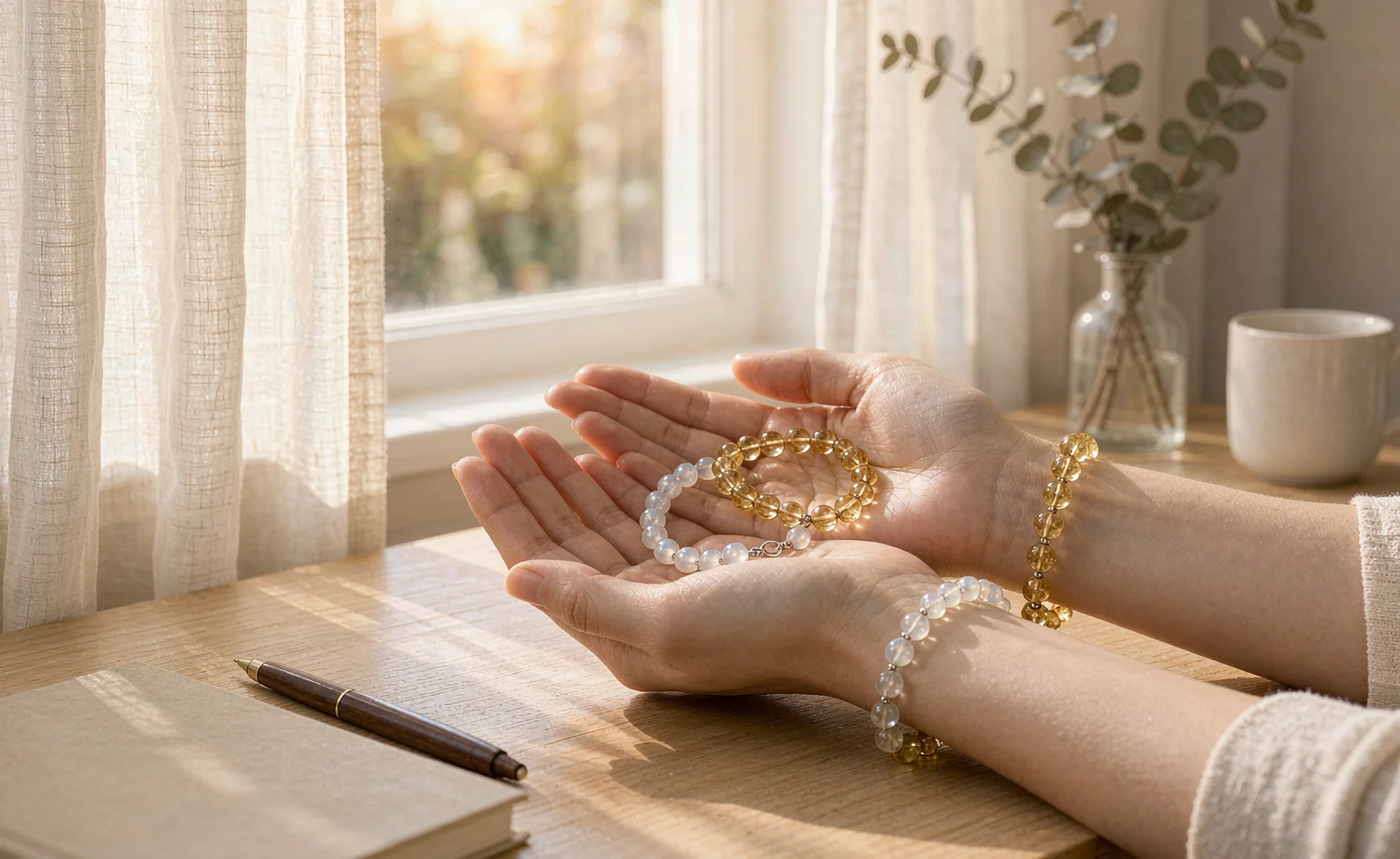
No. The mechanics of yin and yang balance are entirely about sequence: stillness before motion, expansion before refinement, contraction before sleep. Physical objects can serve as reminders of a rhythm you have already chosen, which is how most people use crystal jewelry, but nothing needs to be purchased for the method to work.
What if your schedule is genuinely chaotic?
Keep only one anchor and drop the rest. The highest-value anchor is the Metal turn in the late afternoon, because it stops work from bleeding into the Water hours. A person who closes their day at five can survive a chaotic morning. A person who never closes their day does not have an evening at all.
Where the 6 and the 9 Meet
This is the idea we return to most often at 69player. In the classical image, yang is the odd, active nine and yin is the even, receptive six, and the whole practice sits in the space where they hand off to each other. That handoff is what we call the Yin 6 and Yang 9 balance: not two halves in opposition, but two movements that need each other to complete a day. A yang hour with no yin hour after it is not productivity. It is debt.
Start with one change this week: protect the hours after three in the afternoon for finishing rather than starting, and let the evening cool on purpose. You can browse our collections for pieces that keep the rhythm visible, but the rhythm itself is free, and it begins tonight.
Explore Further
For the practical reset, read nine ways to restore yin and yang energy. The taiji symbol guide explains the classical image, and the entryway guide shows the same handover at the door.
Sources
Internet Encyclopedia of Philosophy: Yinyang — a scholarly overview of the classical concept.