Feng Shui Kitchen: Heat, Water and the One Rule That Matters

A feng shui kitchen question usually arrives with a shopping list attached: a bowl in one corner, a plant in another, a mirror nobody can fully explain. The version we work with is narrower and more useful. A kitchen already contains the two forces the classical material argues about, heat and water, and what you do with the space between them is the part that changes how the room behaves.
This is the feng shui kitchen advice we would give a friend: what the sources actually say about fire and water, the one rule we keep in our own kitchen, what to do when the hob cannot move, and where the honest limit sits. No cures and no promises, and nothing we cannot point at either in a text or in a working kitchen.
What Does a Feng Shui Kitchen Actually Change?
It changes three practical things: where heat and water sit relative to each other, how quickly steam and smells leave the room, and whether the person cooking can see who is walking in. Everything else in a feng shui kitchen is decoration, and decoration is optional.
The classical material is narrower than most interpretations suggest. Fire is described as heat and ascension, Water as flow and introspection, and in the controlling cycle Water controls Fire. Directions and seasons are assigned to the five elements; individual rooms, appliances and paint colours are not. So a feng shui kitchen gets judged on heat, water, air and light rather than on objects, and the judgement is really about how the room behaves at seven in the evening when someone is hungry.
The one rule we keep
Keep a genuine stretch of clear worktop between the flame and the sink. In our own kitchen we settled on 60 cm, roughly an arm’s length plus a chopping board, and it is the feng shui kitchen rule we would keep if we could keep only one. Water controlling Fire is the idea sitting behind it; the 60 cm is our own trade-off, arrived at by cooking rather than by reading, and we say so because pretending a preference is a classical measurement is how this subject gets silly.
Fire and Water Element Balance: The Kitchen That Has Both
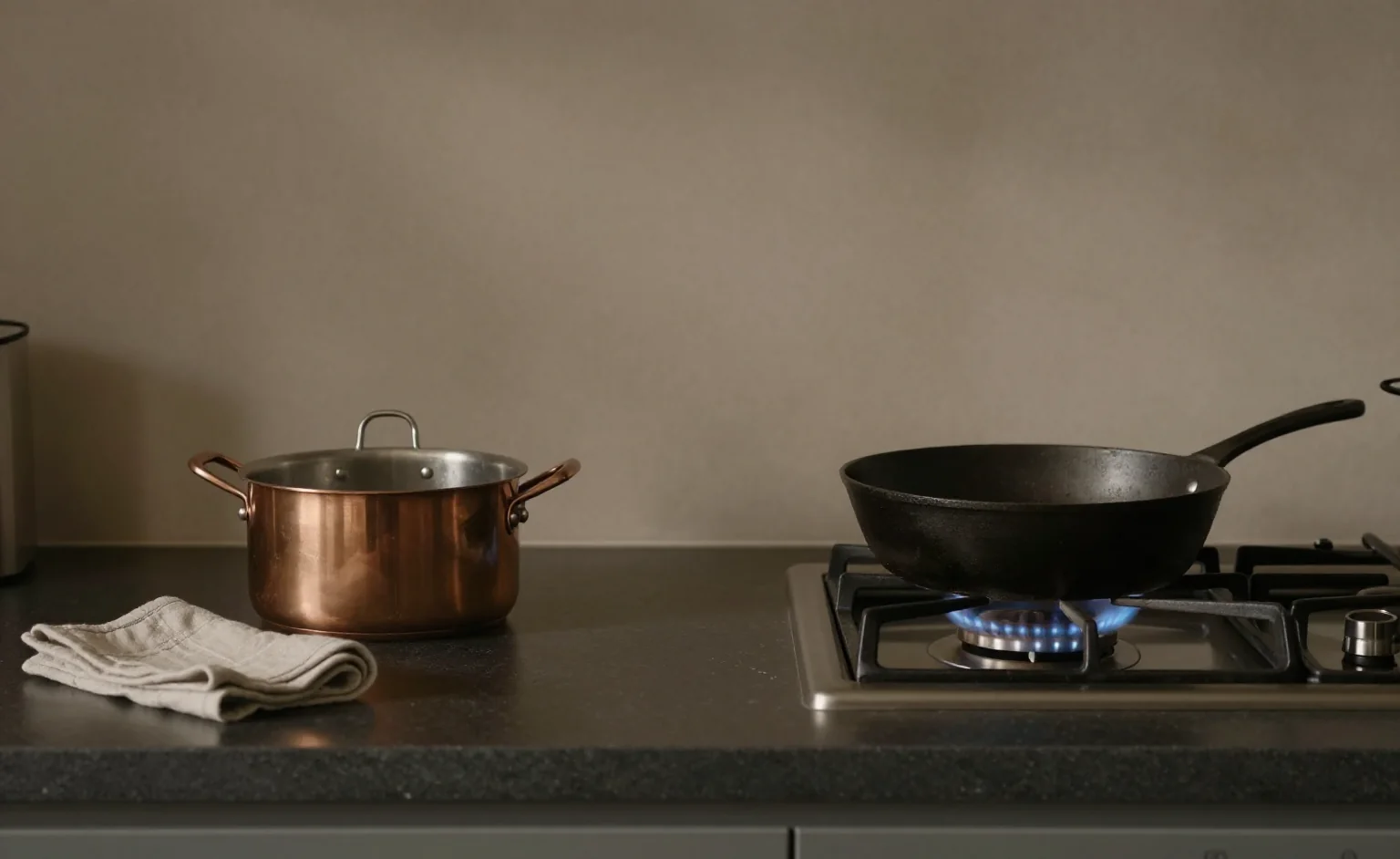
Fire and water element balance is not something you import into a kitchen. The room produces both every evening: a flame that is yang at its most obvious, and a sink that is the coldest, stillest thing in the room, in the classical sense that cold is yin while warmth is yang. The interesting question is not which of the two is stronger. It is whether they collide.
They collide in one specific place, and that place is the countertop. A hob and a sink sharing the same square metre create two tasks that both want your hands at once, which is what actually makes a kitchen unpleasant to cook in. It also puts a pan of boiling water in reach of a wet surface, and there is no version of that arrangement we would defend.
So the feng shui kitchen already has both halves of the argument built in. What it rarely has is room between them, and that gap is the only thing this article would have you change before you buy anything at all. If you want the wider frame, the way the classical day divides into four two-hour periods is set out in our 24-hour rhythm guide, and the same logic about space and flow shows up in the entryway.
Stove Placement Feng Shui: What the Sources Say and What They Do Not
Stove placement feng shui arrives with the most folklore attached, so here is the boundary we hold. The material we work from assigns directions to the five elements — east is wood, south is fire, west is metal, north is water — and it says nothing about which wall a hob belongs on. Claims that a stove must face a particular compass point are additions, and we will not repeat them as tradition.
What we do look at is physical. Can you stand at the hob without turning your back on the whole room? Does the hood pull air away from the cooking surface rather than across it? Fire’s classical sense is heat and ascension, which is exactly why an extractor works, and a hob wedged under an open shelf or against a window frame gives that heat nowhere useful to go.
Kitchen Feng Shui Tips: Three That Survive a Real Week
Kitchen feng shui tips usually arrive in tens. Ours are three, and each one passes a single test: it has to survive a Tuesday when you are tired and nobody is helping. If a change needs remembering every evening, it will be gone by the weekend.
- Give the two tasks their own landing space. One zone for heat, one for water, with clear worktop either side of each. This is the 60 cm rule applied to both ends of the room.
- Let the steam leave. Run the hood, or open a window before the pan goes on rather than after. Heat rises by definition; the only question is whether it rises out of the building or into your ceiling.
- Light the work surface, not the ceiling. In our kitchen a lower, warmer light over the counter did more than any object we have ever put on it, mainly because we stopped chopping in our own shadow.
None of the three is a cure for anything, and none of them needs a purchase you would have to think about twice. They exist because they give the feng shui kitchen something to work with: heat with somewhere to go, water with somewhere to stand, and a person with light on their hands.
Feng Shui Kitchen Colours: Warm, Cool and the Honest Limit
Feng shui kitchen colours are where we slow down, because the classical scheme does not hand out paint charts. It gives us warmth as yang and cold as yin, it pairs seasons and directions with the elements, and it stops there. Any list telling you which colour belongs to which element is somebody else’s system wearing traditional clothes.
What we use instead is light temperature and one consistent surface. Warmer light where food is handled, cooler daylight over the sink in the morning, and walls, worktop and cabinet fronts that read as a single room rather than four separate decisions. If a colour makes you want to cook, it is earning its place; if it was chosen for a diagram, it is furniture.
Questions We Get About the Kitchen
Does a feng shui kitchen need crystals?
No. We sell stones, so treat that answer with the suspicion it deserves, but a crystal on a windowsill is a reminder rather than a fix. If you want one in the kitchen, choose something small and washable that you can put beside the sink, and treat it as the marker of a habit, not as equipment. The logic behind placing a stone deliberately is in our crystal placement guide; the short version is that a feng shui kitchen works because of where things happen, not because of what is on the sill.
What if the hob cannot move?
Most kitchens cannot be re-plumbed, and we would not suggest it for this. If the sink and the hob are stuck together, the fix is a board and a habit: a dedicated chopping board that marks out the prep zone, and washing up after cooking instead of during it. Two small changes do most of what moving a pipe would have done.
Do the directions matter at all?
They matter as a way of thinking about orientation, not as a checklist for appliances. East is wood and spring, south is fire and summer, west is metal and autumn, north is water and winter, and the centre is earth. We reach for that framework when a room has a real problem — a north-facing kitchen that never warms up, or a south-facing one that cooks the cook — and stay quiet the rest of the time.
The Room Where the Day Is Most Yang
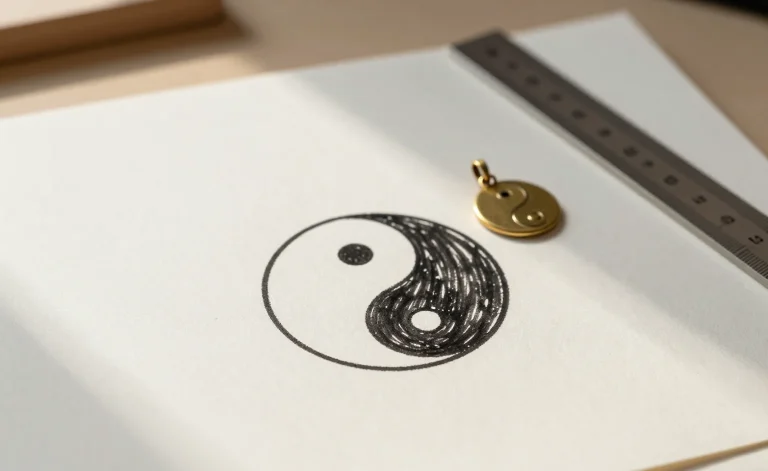
A kitchen is the most yang room in most houses, which is why we are wary of filling it with still objects. At 69player the whole idea rests on the balance of Yin 6 and Yang 9 — the even, still six and the odd, active nine, each holding a dot of the other — and a kitchen is where that exchange is visible: heat doing its work while cold water waits, and each one making the other useful. A feng shui kitchen is simply one where the two are given room.
Start with the gap. Move the board, not the plumbing; open the window before the pan goes on; put a light on the counter. The pieces in our collection are chosen to be handled rather than displayed, and the same principle applied to a whole day is in our nine ways to restore balance.