A Beginner’s Guide to Feng Shui Cures for Your Home : Restore Harmony with Ancient Wisdom

Does your home feel like a sanctuary, or does it feel draining? Do you struggle with restless sleep in your bedroom or a lack of focus in your office? According to the ancient philosophy of the School of Naturalists, these aren’t just coincidences—they are symptoms of misaligned energy.
At 69player, we believe that your environment is an extension of your spirit. Just as your body needs a balance of Yin (6) and Yang (9) to stay healthy, your living space requires the correct flow of Qi (life force energy) to support your goals.
When this flow is blocked, stagnant, or moving too fast, it creates disharmony. This is where Feng Shui Cures come into play.
If you are new to this concept, navigating the world of mirrors, gourds, and coins can be intimidating. You might ask: Are these just decorations? How do they work?
This article serves as A Beginner’s Guide to Feng Shui Cures for Your Home, demystifying these sacred tools and showing you how to use them to correct energy imbalances effectively.
What Are Feng Shui Cures?
In the simplest terms, Feng Shui cures are “acupuncture needles” for your house. Just as an acupuncturist inserts needles to redirect energy flow in the body, we place specific objects in specific areas of the home to redirect the energy of a room.
These cures are often called “Remedies” or “Artifacts.” They work on the principle of the Five Elements (Wood, Fire, Earth, Metal, Water) and the balance of Yin and Yang. The bathroom is a useful test case: it is already yin, so the cure is often restraint rather than more water. Our feng shui bathroom guide explains why.
- Yang Cures (The 9): Items that stimulate energy, deflect attacks, or boost activity (e.g., Bagua Mirrors, Wind Chimes, Bright Lights).
- Yin Cures (The 6): Items that absorb negativity, calm the space, and promote rest (e.g., Wu Lou, Crystals, Salt Water Cures).
The goal is not to fill your house with trinkets, but to strategically place Feng Shui cures for your home to solve specific energetic problems.
Identifying the Problem: Sha Qi vs. Sheng Qi
Before you buy a cure, you must diagnose the illness. In Feng Shui, there are two main types of energy you need to be aware of:
- Sheng Qi (Vital Energy): This is the good stuff. It moves like a meandering river—gentle, nourishing, and vibrant. This is what we want to cultivate.
- Sha Qi (Killing Energy): This is the bad stuff. It moves like a straight arrow—fast, aggressive, and sharp.
Sha Qi is often caused by external structures: a sharp corner of a neighbor’s roof pointing at your window, a T-junction road rushing towards your front door, or even a cluttered, dark hallway. To handle these threats, you need powerful tools to deflect Sha Qi or transform it.
Top 3 Essential Feng Shui Cures for Your Home
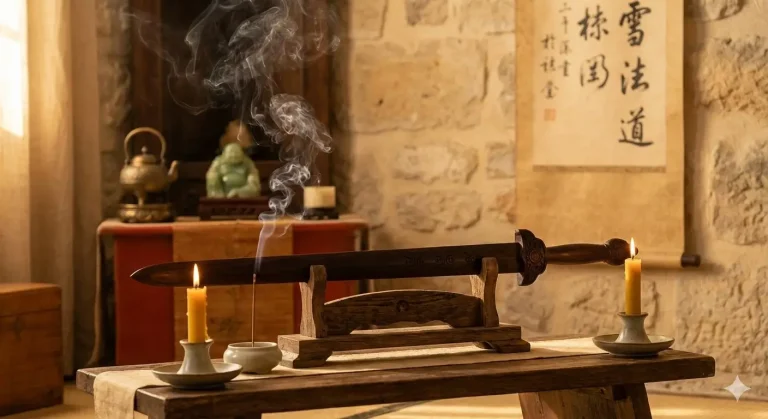
While there are hundreds of traditional artifacts, beginners should start with the “Big Three.” These fundamental tools cover protection, health, and flow—the three pillars of a harmonious life. For one of those protective objects, see the guide to the feng shui peach wood sword.
1. The Bagua Mirror: The Ultimate Shield
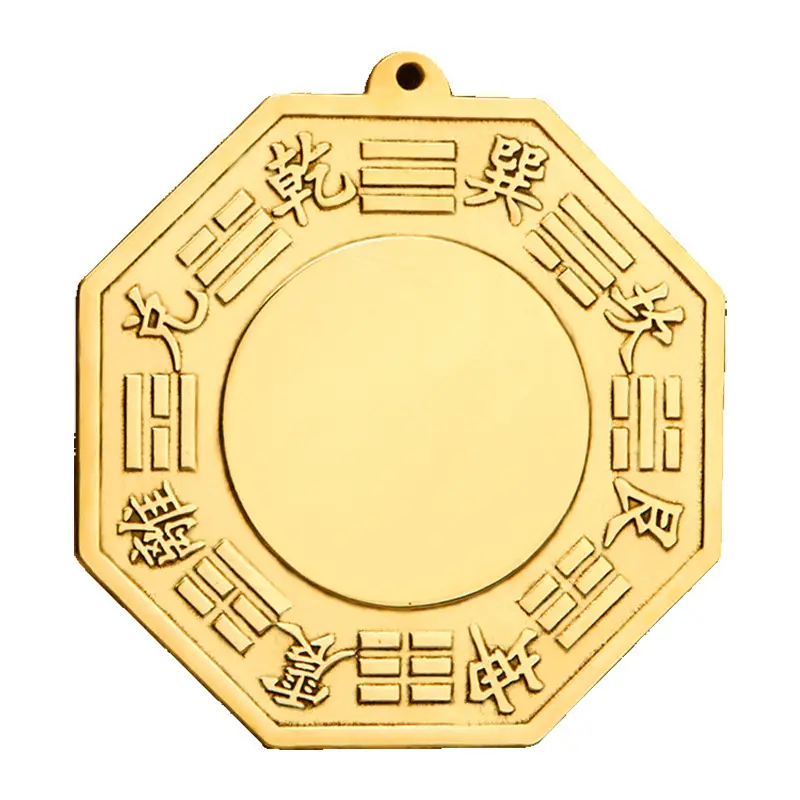
The Bagua Mirror is perhaps the most recognizable Feng Shui tool. It consists of a round mirror surrounded by the eight trigrams of the I Ching. It is a tool of Yang (9) energy, designed for defense.
- The Function: It is used primarily to deflect Sha Qi away from your home. If your front door faces a cemetery, a sharp building corner, or a straight road, this mirror pushes that aggressive energy back.
- Bagua Mirror Placement: This is crucial. Never place a Bagua mirror inside your home. It is too powerful and can reflect energy chaotically, disrupting the peace of your family. It must always be hung outside, above the main door or window, facing outward.
- 69player Tip: Use a Convex mirror to disperse extreme negativity, or a Concave mirror to neutralize passive negative energy.
2. The Wu Lou (The Ancient Vessel): The Vitality Anchor
If the Bagua Mirror is the shield, the Wu Lou is the sanctuary. Shaped like a calabash gourd, it has been used for centuries to preserve essence and “filter” chaotic energy. It embodies Yin (6) energy—absorption and restoration.
- The Function: A brass or natural Wu Lou is designed to harmonize environmental stress, traditionally used to balance the “Black 2” and “Yellow 5” star frequencies in classical Feng Shui.
- Wu Lou for Vitality: Placing a brass Wu Lou on your bedside table serves as a visual anchor for those seeking deep rest and energetic recovery. It acts as a grounding tool, absorbing stagnant Qi to help foster a serene atmosphere.
- 69player Tip: For modern homes, a polished brass Wu Lou looks elegant and fits seamlessly into contemporary decor while acting as a silent guardian of your personal energetic field.
3. Wind Chimes: The Energy Activators
Sound is one of the fastest ways to shift the vibration of a space. Metal wind chimes are particularly powerful because Metal weakens Earth (the element associated with misfortune stars).
- The Function: Wind chimes break up stagnant energy in corners where flow of Qi has stopped. They also announce the arrival of positive news and helpful people.
- Placement: Hang a 6-rod metal wind chime in the Northwest corner of your living room. The number 6 represents “Heaven Luck,” and the metal sound clears the air of heaviness.
Applying Feng Shui Cures for Your Home: A Step-by-Step Plan
Now that you know the tools, here is a simple plan to start applying Feng Shui cures for your home today.
Step 1: The Front Door Check
Stand outside your front door and look out. What do you see?
- Are there sharp angles pointing at you?
- Is there a lamp post splitting your view?
- The Cure: If you feel “attacked” by the environment, install a Bagua Mirror above your door frame. This creates a boundary of protection, ensuring only benevolent energy enters your sanctuary.
Step 2: The Bedroom Sanctuary
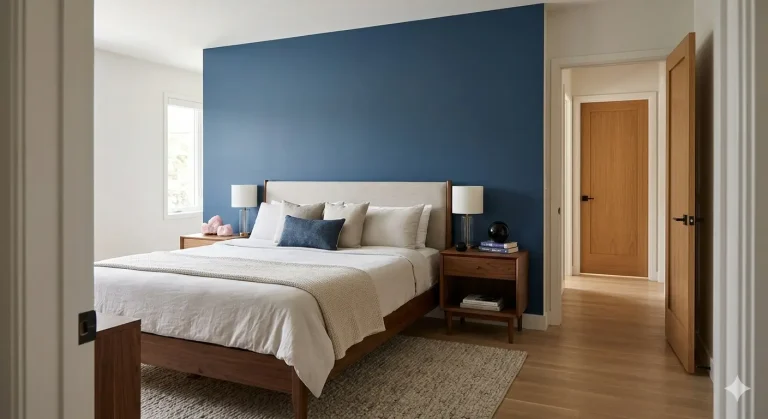
Your bedroom is a Yin space (for sleep and recovery).
- Do you wake up tired?
- Is there a bathroom door facing your bed?
- The Cure: Place a Wu Lou on your nightstand. Using a Wu Lou for health ensures that your aura is protected while you are in your most vulnerable state (sleep). It prevents your vitality from leaking away.
Step 3: The Wealth Corner Flow
Locate the far-left corner of your home from the main entrance. This is generally considered the Wealth corner.
- Is it dark? Cluttered?
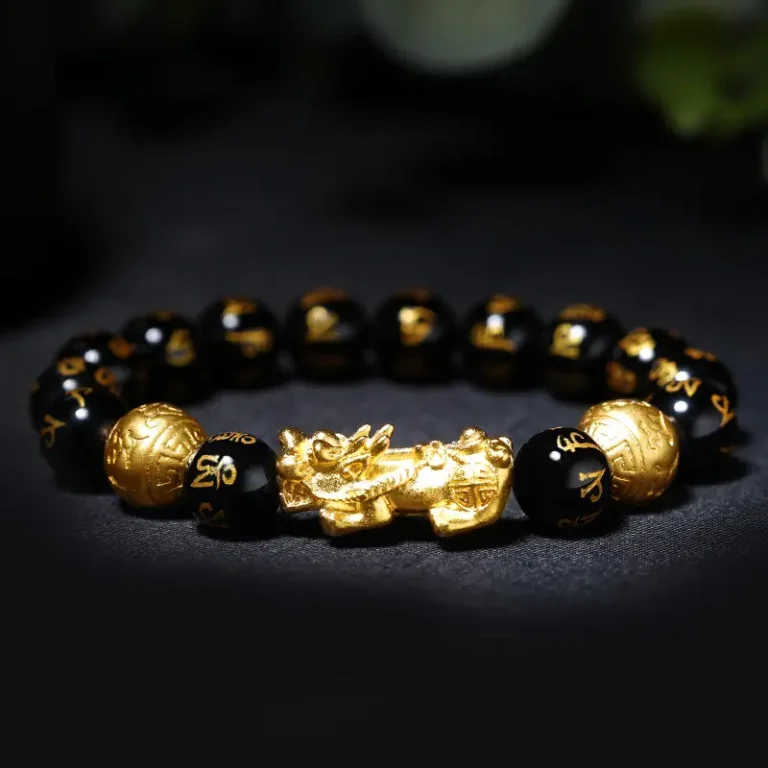
- The Cure: Clear the clutter first. Then, place a symbol of abundance, such as a Pixiu or a bowl of Chinese Coins. This anchors the energy of prosperity and invites the Yang (9) energy of expansion into your finances.
Intention: The Hidden Ingredient
There is one final ingredient that makes these cures work: You.
A brass gourd is just a piece of metal until you assign it a job. When you place these artifacts, you must do so with clear intention.
- As you hang the mirror, think: “I am protecting my family.”
- As you place the Wu Lou, think: “I am cultivating health.”
This mental engagement aligns your personal Qi with the environmental Qi, creating a resonance that amplifies the effect. This is the essence of being a “Player” in the 69player philosophy—actively participating in your destiny.
Conclusion: Start Small, Think Big
Feng Shui is a vast ocean of knowledge, but you don’t need to be a master to start feeling the benefits. By introducing a few key Feng Shui cures for your home, you are taking the first step towards a balanced life.
Remember the balance of 6 and 9. Protect your peace (Yin) and activate your potential (Yang). Look around your home today—what is it telling you, and what correction does it need?
Ready to harmonize your space?
Explore our curated collection of traditional remedies, crafted with authenticity and intention.
- Shop the Feng Shui Artifacts Collection
- Shop Bagua Mirrors & Protection
- Shop Wu Lou & Health Cures
Disclaimer
Please note: Feng Shui is an ancient practice of environmental arrangement and aesthetics. The information provided here is for cultural and educational purposes. While these practices can promote a sense of harmony and psychological well-being, they are not a substitute for professional medical advice, legal counsel, or financial planning.